
Muriatic Acid (Hydrochloric Acid)
Muriatic Acid (Hydrochloric Acid)
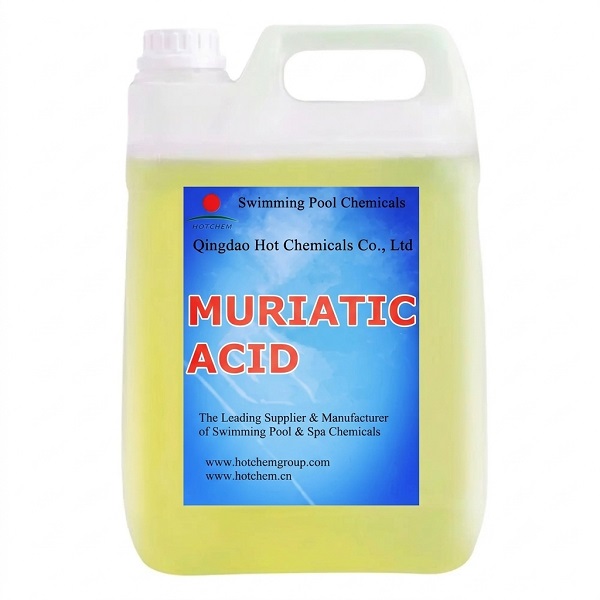
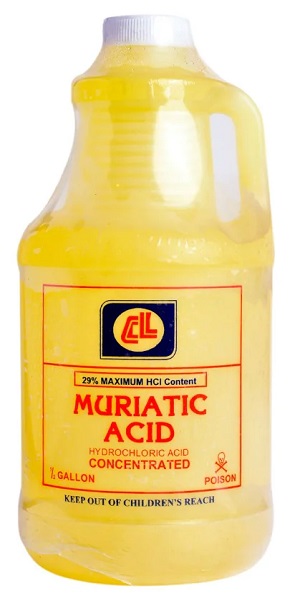
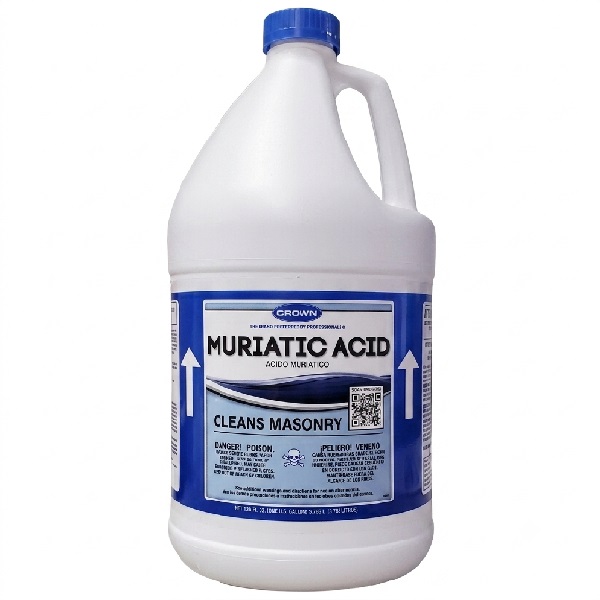
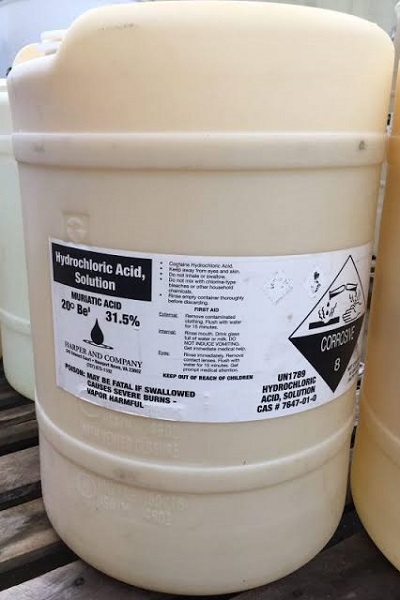
Muriatic acid (hydrochloric acid) is a powerful liquid pH reducer for swimming pools. Lowers pH and alkalinity when levels are too high. Prevents scale formation and protects equipment. More economical than dry acid alternatives. Requires careful handling with safety goggles and gloves. Egret Swimming Pools supplies muriatic acid across Kenya with expert technical support.
Verified Technical Specifications
| Specification | Verified Information |
| Product Name | Muriatic Acid (Hydrochloric Acid) |
| Chemical Category | Additional Important Pool Chemicals |
| Active Ingredient | Hydrochloric Acid |
| Chemical Formula | HCl |
| Alternative Names | Hydrochloric Acid, HCl |
| Primary Purpose | Lowers pH and alkalinity |
| Typical Usage | pH and alkalinity reduction |
| Available Strengths | 15%, 31%, 33% |
| Packaging | 5L, 20L, 200L containers |
Contact Us:
- 📍 Location: Kihunguro, Ruiru – Kiambu County
- 📞 Call/WhatsApp: +254726545148
- 📧 Email: info@egretswimmingpools.co.ke | egreteswimmingpools@gmail.com
- 🕒 Working Hours: Mon – Sat 8:30AM – 5PM
Description
Muriatic Acid (Hydrochloric Acid) – pH & Alkalinity Reducer for Swimming Pools in Kenya
Product Data
| Attribute | Verified Information |
| Product Name | Muriatic Acid (Hydrochloric Acid) |
| Chemical Category | Additional Important Pool Chemicals |
| Active Ingredient | Hydrochloric Acid |
| Chemical Formula | HCl |
| Alternative Names | Hydrochloric Acid, HCl |
| Primary Purpose | Lowers pH and alkalinity |
| Typical Usage | pH and alkalinity reduction |
Product Overview
Muriatic Acid, also known as Hydrochloric Acid (HCl), is a powerful swimming pool water treatment chemical used to lower pH and total alkalinity when levels rise above the optimal range. As a member of the additional important pool chemicals category, muriatic acid provides effective and rapid pH reduction that restores water balance and protects pool equipment and surfaces.
Muriatic acid is a diluted solution of hydrochloric acid, a strong mineral acid with a characteristic pungent odour. It is chemically identical to hydrochloric acid, with the main difference being purity—muriatic acid is the less pure, commercial-grade version. Commercially available muriatic acid typically has a concentration of 14.5% to 31% hydrochloric acid.
In the pool maintenance industry, muriatic acid is widely recognised as one of the most effective and affordable methods for reducing high pH and alkalinity. When pH rises above 7.8, chlorine effectiveness decreases, water becomes cloudy, and calcium scaling can occur on pool surfaces and equipment. Muriatic acid provides the rapid correction needed to restore optimal water balance.
The product is available in liquid form, typically in 5L, 20L, and 200L containers. It is important to distinguish muriatic acid from other pool acids—unlike dry acid (sodium bisulfate), muriatic acid does not introduce sulfates into the water, which can accumulate and potentially damage concrete and metal surfaces.
Muriatic acid has multiple uses in pool maintenance beyond pH reduction. It is commonly used for cleaning cartridge filters, removing calcium scale and mineral deposits, acid washing plaster pools, and cleaning stains from pool surfaces. However, due to its corrosive nature, it is not suitable for vinyl liner pools.
Egret Swimming Pools supplies muriatic acid to residential and commercial pool owners across Kenya. As a trusted pool chemical supplier based in Kihunguro, Ruiru, we provide quality pH adjustment solutions backed by expert technical advice.
How It Works
Muriatic acid works through a direct chemical reaction that neutralises alkaline substances in pool water. Understanding this mechanism helps pool owners appreciate why proper handling and dosing are essential.
The Chemistry of pH and Alkalinity Reduction
When muriatic acid (HCl) is added to pool water, it dissociates into hydrogen ions (H⁺) and chloride ions (Cl⁻):
HCl → H⁺ + Cl⁻
The hydrogen ions released by this dissociation react with bicarbonate (HCO₃⁻) and carbonate (CO₃²⁻) ions in the water:
H⁺ + HCO₃⁻ → H₂CO₃ → H₂O + CO₂
2H⁺ + CO₃²⁻ → H₂CO₃ → H₂O + CO₂
These reactions consume the alkaline buffering capacity of the water, reducing both pH and total alkalinity.
Relationship Between pH and Alkalinity Reduction
When muriatic acid is added to pool water, it lowers both pH and alkalinity. Industry guidance indicates that for every 0.1 reduction in pH, total alkalinity is reduced by approximately 1.6 ppm. This relationship means pool owners often use muriatic acid primarily to reduce pH, then adjust alkalinity separately using sodium bicarbonate (baking soda) if needed.
When to Use Muriatic Acid
Muriatic acid is indicated when:
| Condition | Issue | Acid Action |
| pH above 7.8 | High pH | Rapidly lowers pH to acceptable range |
| Total alkalinity above 120 ppm | High alkalinity | Reduces alkalinity to 80-120 ppm |
| Scale formation | Calcium deposits | Dissolves calcium carbonate |
| Cloudy water | pH-driven precipitation | Restores water clarity |
Advantages Over Alternatives
Muriatic acid offers several advantages over alternative pH reducers:
- No sulfate addition: Unlike dry acid (sodium bisulfate), muriatic acid does not introduce sulfates that can accumulate and damage concrete or metal surfaces over time
- Cost-effectiveness: Muriatic acid is typically significantly cheaper than dry acid equivalents for the same pH reduction
- No cyanuric acid: Unlike some chlorine products, muriatic acid does not add cyanuric acid to the water
- Familiarity: Widely used and understood by pool professionals across Kenya
Why It Matters
Proper pH and alkalinity management is essential for pool water quality. Muriatic acid plays a critical role in maintaining water balance:
- Chlorine Effectiveness
Chlorine effectiveness is highly dependent on pH. At pH 7.2, chlorine is approximately 65% effective as hypochlorous acid (HOCl), the active disinfecting form. At pH 8.0, this drops to approximately 24% effectiveness. Maintaining pH in the 7.2-7.8 range ensures chlorine works efficiently, protecting swimmers from waterborne pathogens. - Equipment Protection
High pH water promotes calcium carbonate scale formation. Scale accumulates on heaters, pumps, salt cells, and piping, reducing efficiency and causing premature failure. Muriatic acid prevents this damage by maintaining proper water balance. - Surface Protection
Scale deposits on plaster surfaces and tile grout are unsightly and difficult to remove. High pH can also accelerate plaster etching. Muriatic acid helps prevent these surface problems. - Swimmer Comfort
High pH water can cause eye irritation, dry skin, and leave swimmers feeling sticky. Proper pH ensures comfortable swimming conditions. - Regulatory Compliance
Commercial pools must maintain pH within regulatory ranges (typically 7.2-7.8). Muriatic acid helps commercial operators maintain compliance.
Multiple Uses
Beyond pH adjustment, muriatic acid has several valuable pool maintenance applications:
- Filter cleaning: Removes mineral deposits from cartridge and DE filters
- Stain removal: Effective against rust and mineral stains on concrete/gunite
- Scale removal: Dissolves calcium deposits from pool surfaces and tile
- Grout cleaning: Removes stains and mineral deposits from tile grout
- Acid washing: Restores plaster pool surfaces by removing a thin surface layer
Key Benefits
- Effective pH and Alkalinity Reduction
Muriatic acid provides rapid, reliable pH reduction when levels exceed 7.8. Its powerful acid action quickly restores water balance, preventing the problems associated with high pH.
- Why it matters: Rapid correction prevents scale formation and restores chlorine effectiveness.
- Practical outcome: Balanced water chemistry with minimal downtime.
- Prevents Scale Formation
By maintaining proper pH, muriatic acid prevents calcium carbonate scale from forming on pool surfaces, heaters, salt cells, and equipment. This scale protection extends equipment life and preserves pool appearance.
- Why it matters: Scale damage is costly and difficult to repair.
- Practical outcome: Protected equipment and surfaces.
- No Sulfate Addition
Muriatic acid does not add sulfates to pool water. High sulfate levels can damage concrete/plaster surfaces and corrode metal equipment over time.
- Why it matters: Eliminates long-term corrosion and surface damage risk.
- Practical outcome: Safer long-term water chemistry.
- Cost-Effective pH Management
Muriatic acid is significantly more economical than dry acid equivalents. For the same pH reduction, muriatic acid typically costs substantially less.
- Why it matters: Lower chemical costs over time.
- Practical outcome: Budget-friendly water balance maintenance.
- Versatile Pool Maintenance Tool
Beyond pH adjustment, muriatic acid serves multiple functions: filter cleaning, stain removal, scale removal, and acid washing.
- Why it matters: One product serves many maintenance needs.
- Practical outcome: Simplified chemical inventory.
- Well-Established Professional Standard
Muriatic acid is the preferred acid for professional pool maintenance in Kenya and globally. Professional service providers rely on its predictable performance.
- Why it matters: Proven reliability and predictable results.
- Practical outcome: Professional-grade water quality.
Problem-Solution Table
| Problem | Likely Cause | How Product Helps | Expected Outcome |
| pH above 7.8 | High alkalinity/aeration | Acid neutralises alkaline species | pH restored to 7.2-7.8 |
| Scale on pool surfaces | Calcium precipitation | Dissolves calcium carbonate | Scale-free surfaces |
| Cloudy water | High pH causing precipitation | Corrects pH to dissolve minerals | Clear water |
| Chlorine not effective | High pH reducing chlorine activity | Optimises pH for chlorine | Effective sanitation |
| High total alkalinity | Mineral accumulation | Reduces alkalinity to 80-120 ppm | Balanced water |
| Filter pressure high | Mineral deposits | Cleans cartridge/DE filter | Restored filtration |
Dosage & Application Guidance
Dosage requirements vary depending on manufacturer specifications, pool volume, current pH level, target pH, and treatment objectives. Always follow product label instructions and professional water test results.
General swimming pool industry guidance for muriatic acid use:
- Dose rate: For an average pool (15,000 gallons/57,000 litres), approximately 1 quart (946 ml) of 31% muriatic acid lowers pH by approximately 0.5-0.7 units
- For metric pools: Approximately 150-200 ml per 10,000 litres lowers pH by 0.1-0.2 units (varies by acid strength)
- Critical safety rule: Always add acid to water, never water to acid
Strength Considerations
| Acid Strength | Typical Use | Handling |
| 15% | Safer for residential use | Less fuming |
| 31% | Professional/commercial | Stronger fumes |
| Industrial (>31%) | Not for pool use | Excessive hazard |
Water Balance Reference Table
The values below represent general swimming pool industry guidance and are not specifications of the product described on this page. Actual operating targets may vary depending on local regulations, pool type, water source, equipment design, and operating objectives.
| Parameter | Recommended Range | Notes |
| pH | 7.2 – 7.8 | Target 7.4-7.6 for optimal comfort |
| Total Alkalinity | 80 – 120 ppm | Buffer capacity; adjust after pH |
| Free Chlorine | 1.0 – 4.0 ppm | Effective at proper pH |
| Calcium Hardness | 250 – 350 ppm | Scale risk increases at high pH |
Step-By-Step Application Guide
Safety Preparation (Essential)
- Put on safety gear: Safety goggles (essential), acid-resistant gloves, long sleeves, and protective footwear
- Prepare work area: Ensure good ventilation, have a hose or water source nearby, keep baking soda available for neutralising spills
- Test water: Accurately measure current pH and alkalinity using a reliable test kit
Application Procedure
Step 1: Calculate required dose
- Use product label instructions
- For an average pool (57,000 litres), start with 1 litre of 31% acid and retest
- Start with half the calculated dose—you can always add more
Step 2: Dilute acid (recommended method)
- Fill a 5-gallon plastic bucket with clean water
- Add acid to water (never water to acid)
- Pour slowly while stirring with a wooden or plastic stir stick
- Mix in ratio of approximately 10:1 water to acid
Step 3: Apply to pool
- Ensure pump is running
- Position at deep end, in front of return jets
- Slowly pour the diluted acid into the pool, walking away from fumes
- Alternatively, pour undiluted acid directly into deep end in front of return jets, but dilution is safer
Step 4: Circulate and retest
- Run pump for at least 5 hours
- Test pH and alkalinity again
- If still too high, repeat with smaller dose
- If pH drops too low, use pH Plus (soda ash) to raise
Important Safety Notes
- Never pour muriatic acid into skimmer or gutter—can damage equipment
- Never mix with bleach/chlorine—produces toxic chlorine gas
- Never add water to acid—causes dangerous splashing
- Wait at least one hour before swimming—retest before entering
Kenya & East Africa Usage Guide
Muriatic acid is widely available and commonly used for pool pH adjustment across Kenya:
- Local Availability: Hydrochloric acid is supplied in Kenya in various concentrations and packaging sizes, including 5L, 20L, and 200L containers for commercial applications.
- Water Quality Context: Kenya’s water varies widely—from hard water in Kitui to soft water in other regions. This variability means some pools require more frequent pH adjustment with muriatic acid to maintain proper balance.
- Commercial Applications: Hotels, resorts, schools, and other commercial facilities in Nairobi, Mombasa, Kisumu, and across East Africa use muriatic acid for pool pH management.
- Seasonal Considerations: During Kenya’s rainy seasons, pH may fluctuate due to rainwater introduction and treatment changes. Commercial facilities maintain regular testing and adjustment protocols.
- Coastal Pools: High humidity and salt spray may affect water chemistry. Regular pH monitoring and muriatic acid adjustment help maintain balance in these conditions.
- Local Suppliers: Several Kenyan chemical suppliers stock industrial-grade and pool-grade muriatic acid, with delivery available across Kenya, Uganda, Tanzania, Rwanda, and South Sudan.
Commercial Applications
Muriatic acid is essential for commercial pool operations:
- Hotels and Resorts: pH must be maintained within regulatory ranges for guest safety and compliance. Commercial facilities typically have regular testing protocols that include muriatic acid for pH reduction.
- Schools and Universities: Educational facilities use muriatic acid to maintain proper pH for student health and regulatory compliance.
- Water Parks: High bather loads and aeration cause pH to rise. Muriatic acid provides the pH correction needed for these facilities.
- Pool Maintenance Companies: Professional service providers include muriatic acid in standard pH adjustment programs for their commercial clients.
- Property Management: Managed apartment pools require regular pH monitoring and adjustment. Muriatic acid is used to maintain proper water balance.
- Heating Facilities: Pools with heaters are particularly susceptible to scale formation. Regular pH control with muriatic acid protects heating equipment.
Residential Applications
- Private Pools: Homeowners use muriatic acid for occasional pH correction when testing indicates high pH.
- Holiday Homes: Properties used intermittently may require pH adjustment before guest arrival.
- Airbnb Properties: Investment property owners ensure proper pH for guest comfort and safety.
- First-Time Pool Owners: New pool owners may prefer safer alternatives initially, but many graduate to muriatic acid for cost-effectiveness.
Safety & Handling- Critical Safety Rules
Muriatic acid is one of the most hazardous pool chemicals when mishandled. Follow these safety rules strictly:
Personal Protective Equipment:
- Safety goggles or full-face shield (essential)
- Chemical-resistant gloves (rubber or PVC)
- Protective clothing covering arms and legs
- Respirator in poorly ventilated areas
Handling Rules:
- Always add acid to water—never water to acid
- Never mix with bleach, chlorine, or other chemicals—produces toxic chlorine gas
- Use only acid-resistant containers (plastic)
- Work in well-ventilated areas
- Keep baking soda nearby to neutralise spills
Storage:
- Store in original container
- Keep away from children and pets
- Store away from other pool chemicals and oxidizers
- Keep in a cool, dry place
Spill Response:
- Small spills: Neutralise with baking soda, then flush with water
- Skin contact: Flush with water for 15 minutes; remove contaminated clothing
- Eye contact: Flush with water for 15 minutes; seek immediate medical attention
- Inhalation: Move to fresh air; seek medical attention if breathing difficulty occurs
- Ingestion: Do not induce vomiting; seek immediate medical attention
Product Comparison
| Feature | Muriatic Acid | pH Minus (Dry Acid) |
| Chemical Formula | HCl | NaHSO₄ |
| Form | Liquid | Granular/powder |
| Primary Purpose | Lowers pH and alkalinity | Lowers pH |
| Sulfate Addition | No | Yes (can accumulate) |
| Safety | Hazardous fumes | Safer to handle |
| Cost | Generally lower | Generally higher |
| Effectiveness | Strong | Moderate |
| Multiple Uses | Yes (scale removal, cleaning) | Limited |
Cross-Selling Recommendations
- pH Plus (Soda Ash): If pH drops too low after muriatic acid addition, pH Plus raises pH back to the optimal range.
- DPD Tablets: Regular testing ensures accurate pH and chlorine measurement for proper adjustment.
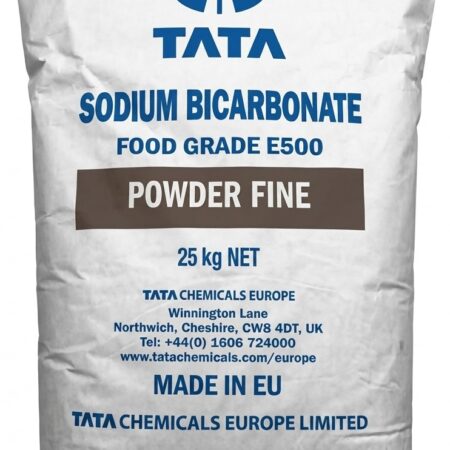
- Sodium Bicarbonate: After pH reduction, alkalinity may need raising. Sodium Bicarbonate restores alkalinity to 80-120 ppm.
- Pool Test Kit: Complete water balance management requires pH, alkalinity, chlorine, and hardness testing.
- Safety Equipment: Acid-resistant gloves and safety goggles are essential for safe handling.
Buying Guide
Choosing Muriatic Acid
- Strength: 15% for residential (safer); 31% for professional/commercial
- Packaging: Small containers (5L) for residential; bulk (20L, 200L) for commercial
- Purity: Pool-grade acid is preferred for pool applications
Common Mistakes to Avoid
- Using muriatic acid for vinyl pools (too harsh)
- Not wearing proper protective gear
- Adding water to acid (causes splashing)
- Mixing with chlorine or bleach (toxic gas)
- Adding too much at once (start with half dose)
- Not retesting after application
What Professionals Recommend
- Use muriatic acid for cost-effective pH reduction
- Always wear safety goggles and gloves
- Add acid slowly to water for dilution
- Run pump for 5 hours after application
- Retest before swimming
Muriatic Acid- FAQs
- What is muriatic acid used for in swimming pools?
Muriatic acid is used to lower pH and total alkalinity when levels are too high, restoring water balance and protecting pool equipment. - Is muriatic acid the same as hydrochloric acid?
Yes, muriatic acid is a diluted solution of hydrochloric acid (HCl). Muriatic is the commercial-grade, less pure version. - How do I safely add muriatic acid to my pool?
Always add acid to water, never water to acid. Wear safety goggles and gloves. Pour diluted acid into the deep end with pump running. - How long after adding muriatic acid can I swim?
Wait at least one hour after circulation, then retest pH. Wait longer if pH is still outside 7.2-7.8 range. Never swim in improperly balanced water. - Can I use muriatic acid to clean my pool filter?
Yes, muriatic acid effectively removes scale and mineral deposits from cartridge and DE filters. - What happens if I add too much muriatic acid?
pH drops too low, causing eye and skin irritation and potentially damaging equipment. Use pH Plus (soda ash) to raise pH back up. - Can muriatic acid be used on vinyl pools?
No, muriatic acid is too harsh for vinyl liners. Use alternative pH reducers.
Muriatic acid (hydrochloric acid)- Summary
Muriatic acid (hydrochloric acid) is a powerful liquid acid used to lower pH and total alkalinity in swimming pools. Chemically identical to hydrochloric acid, it provides effective pH reduction when levels exceed 7.8. Essential for preventing scale formation, protecting equipment, and restoring chlorine effectiveness. More economical than dry acid alternatives. Requires careful handling with safety goggles, gloves, and proper dilution. Egret Swimming Pools supplies muriatic acid with expert guidance for safe, effective pH management.
Maintain Proper pH with Professional-Grade Muriatic Acid
Don’t let high pH damage your pool equipment and reduce chlorine effectiveness. Egret Swimming Pools provides quality muriatic acid and expert water chemistry guidance for residential and commercial pool owners throughout Kenya.
- 📍 Location: Kihunguro, Ruiru – Kiambu County
- 📞 Call/WhatsApp: +254726545148
- 📧 Email: info@egretswimmingpools.co.ke | egreteswimmingpools@gmail.com
- 🕒 Working Hours: Mon – Sat 8:30AM – 5PM
Bulk orders welcome. Commercial contracts available. Let our pool chemistry specialists help you achieve and maintain perfect water balance.
Reviews
There are no reviews yet.