
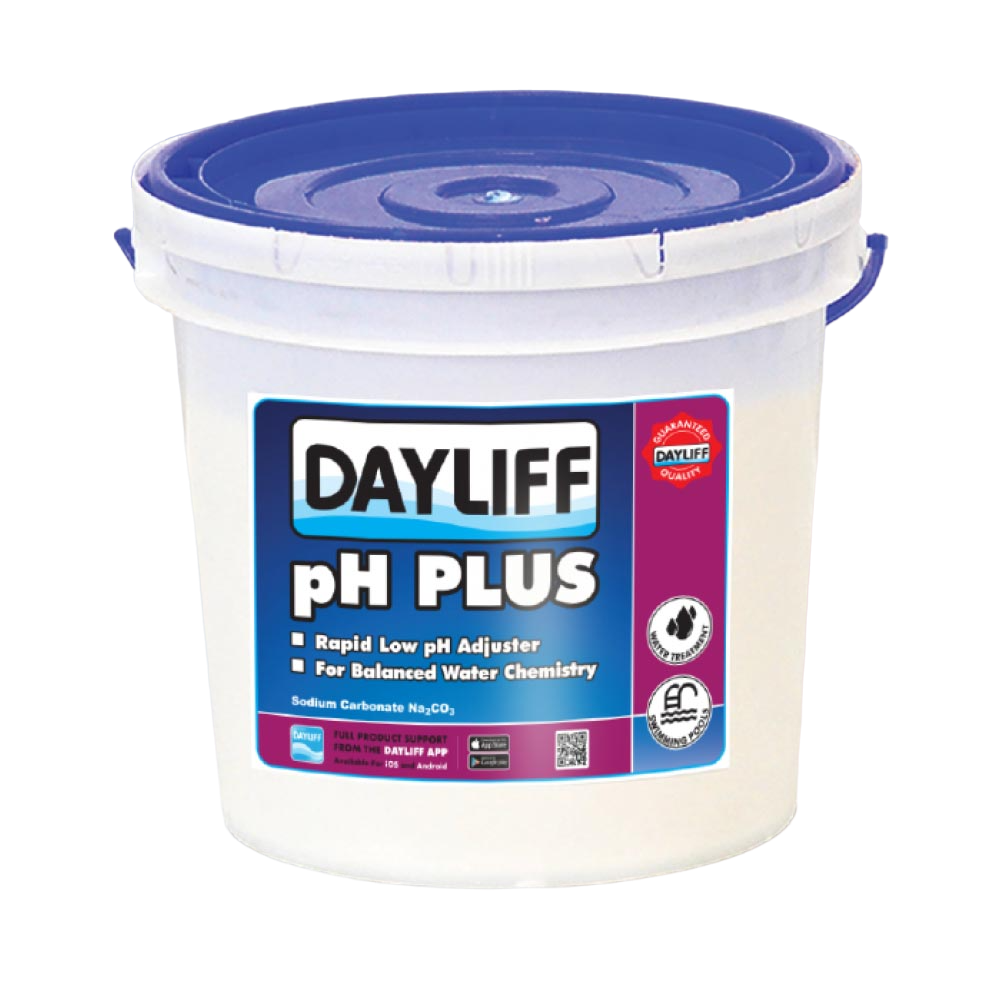
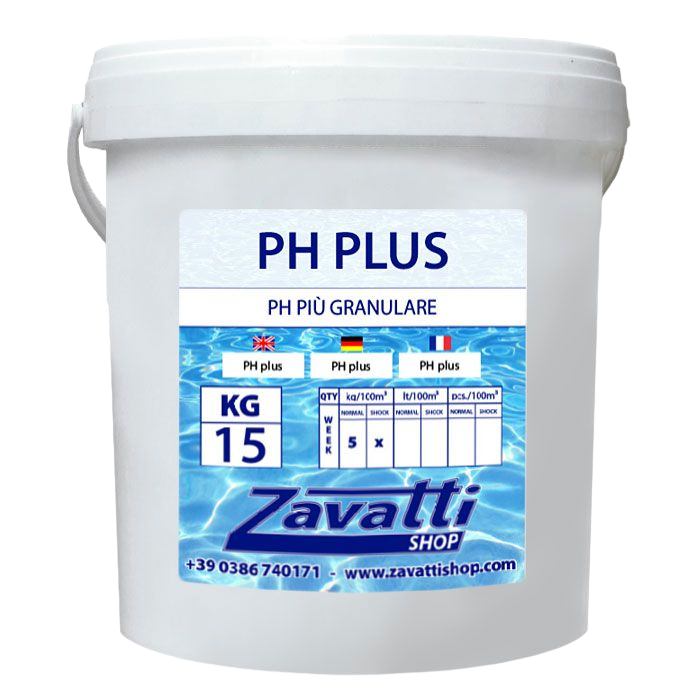
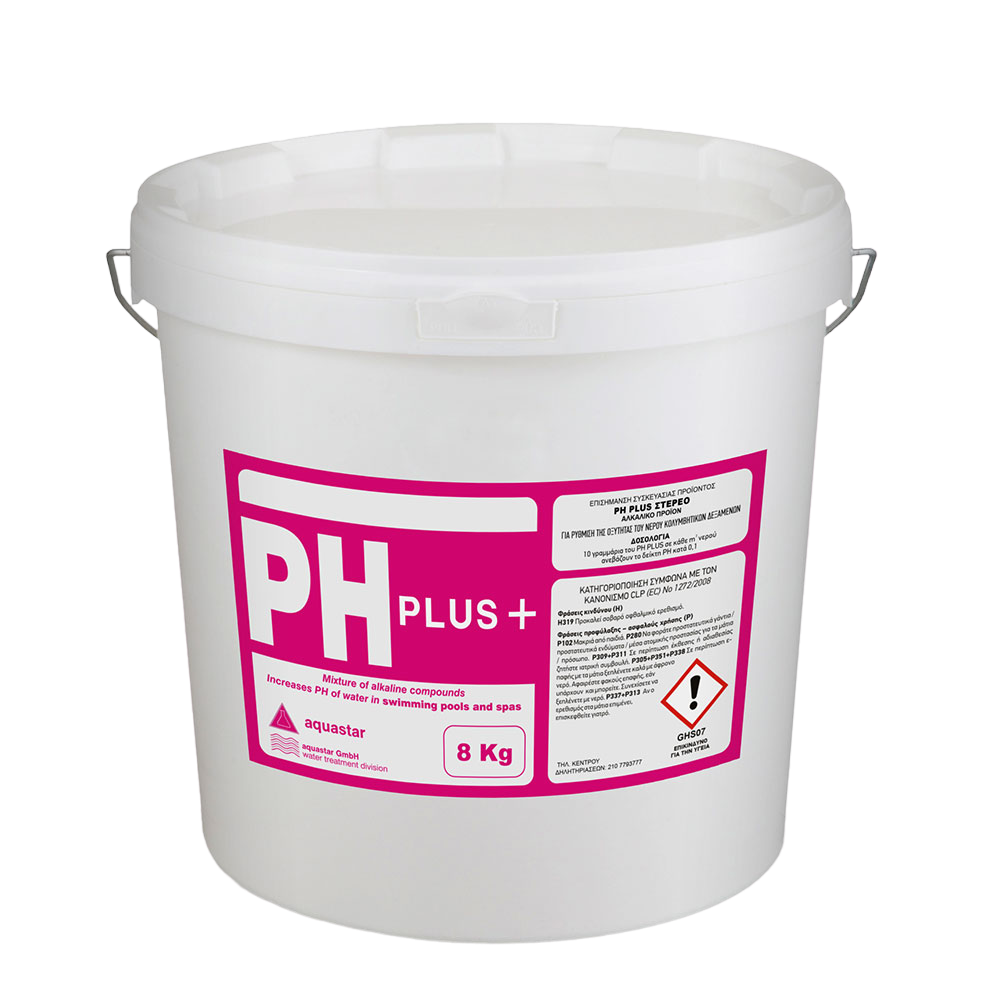
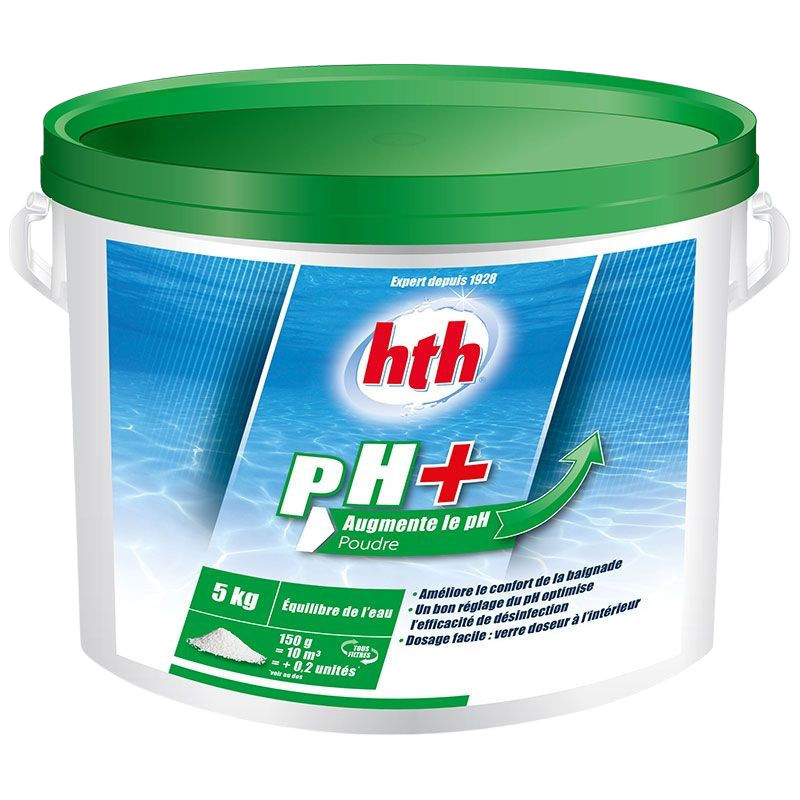
pH Plus- 5Ltrs
KSh 1,300.00
pH Plus
What is pH Plus?
pH Plus is a pool pH increaser containing sodium carbonate for raising low pH levels. Corrects acidic water to the optimal 7.2-7.8 range. Essential for swimmer comfort, equipment protection, and chlorine effectiveness. Easy-to-use granular form. Egret Swimming Pools supplies pH Plus across Kenya with expert technical support for proper water balance.
Verified Technical Specifications
| Specification | Verified Information |
| Product Name | pH Plus |
| Chemical Category | pH Adjustment Chemicals |
| Active Ingredient | Sodium Carbonate (Na₂CO₃) |
| Chemical Formula | Na₂CO₃ |
| Alternative Names | Soda Ash, pH Increaser |
| Primary Purpose | Raises pool pH |
| Typical Usage | Low pH correction |
| Application Method | Granular/powder, added directly to pool |
Contact Us
- 📍 Location: Next to Total Petrol Station Kihunguro, Thika Road
- 📞 Call/WhatsApp: +254726545148
- 📧 Email: info@egretswimmingpools.co.ke | egreteswimmingpools@gmail.com
- 🕒 Working Hours: Mon – Sat 8:30AM – 5PM
Description
pH Plus – Pool pH Increaser & Alkalinity Booster for Swimming Pools in Kenya
Product Data
| Attribute | Verified Information |
| Product Name | pH Plus |
| Chemical Category | pH Adjustment Chemicals |
| Active Ingredient | Sodium Carbonate (Na₂CO₃) |
| Chemical Formula | Na₂CO₃ |
| Alternative Names | Soda Ash, pH Increaser |
| Primary Purpose | Raises pool pH |
| Typical Usage | Low pH correction |
pH Plus
Product Overview
pH Plus is a swimming pool water treatment chemical used to raise pool pH when levels drop below the optimal range. As a member of the pH adjustment chemical category, pH Plus contains Sodium Carbonate (Na₂CO₃) as its active ingredient, providing effective and rapid pH correction for pools experiencing acidic conditions.
Maintaining proper pH is one of the most critical aspects of pool water chemistry. pH measures how acidic or basic the water is on a scale of 0 to 14, with 7.0 being neutral. For swimming pools, the ideal pH range is 7.2 to 7.8. When pH drops below 7.2, the water becomes acidic, leading to a host of problems including equipment corrosion, swimmer discomfort, and reduced chlorine effectiveness. pH Plus provides the solution by safely and effectively raising pH back to optimal levels.
Sodium Carbonate, commonly known as soda ash, is the preferred pH increaser for swimming pools. It raises pH without significantly affecting total alkalinity, making it ideal for pH correction when alkalinity is already at appropriate levels. Unlike some other alkalinity-adjusting chemicals, pH Plus provides targeted pH adjustment without excessive alkalinity increase.
The product is available in granular or powder form, designed for easy dissolution and application. pH Plus is a fundamental component of every pool maintenance program, as pH naturally tends to drift downward over time due to factors such as rainfall, bather load, and the addition of acidic chemicals.
pH Plus is distinct from sodium bicarbonate (baking soda) which is primarily used to raise total alkalinity. While sodium bicarbonate does have a slight pH-raising effect, pH Plus (sodium carbonate) is far more effective for pH correction and is the appropriate choice when pH is low but alkalinity is within range.
Egret Swimming Pools supplies pH Plus to residential and commercial pool owners across Kenya. As a trusted pool chemical supplier based in Kihunguro, Ruiru, we provide quality pH adjustment solutions backed by expert technical advice.
How It Works
pH Plus works through a straightforward chemical reaction that increases the pH of pool water. Understanding this mechanism helps pool owners appreciate why proper pH management is essential for pool water quality.
The Chemistry of pH Increase:
Sodium Carbonate (Na₂CO₃) dissociates in water to form sodium ions (Na⁺) and carbonate ions (CO₃²⁻):
Na₂CO₃ → 2Na⁺ + CO₃²⁻
The carbonate ions then react with water to form hydroxide ions (OH⁻), which increase the pH:
CO₃²⁻ + H₂O → HCO₃⁻ + OH⁻
This reaction consumes hydrogen ions (H⁺) from the water, reducing acidity and raising pH. The result is water that is less acidic and more balanced.
pH and Its Importance:
pH is a measure of hydrogen ion concentration in water. The pH scale is logarithmic, meaning each unit change represents a tenfold change in acidity or alkalinity:
| pH Value | Condition | Implications |
| Below 7.0 | Acidic | Corrosion, eye irritation, chlorine inefficiency |
| 7.2-7.8 | Optimal | Balanced, comfortable, effective sanitation |
| Above 7.8 | Alkaline | Scale formation, chlorine inefficiency, cloudy water |
The Relationship Between pH and Chlorine:
Chlorine exists in two forms in pool water: hypochlorous acid (HOCl) and hypochlorite ion (OCl⁻). HOCl is approximately 80-100 times more effective as a disinfectant than OCl⁻. The ratio between these forms depends on pH:
| pH | HOCl (Effective) | OCl⁻ (Less Effective) |
| 6.0 | 97% | 3% |
| 7.2 | 65% | 35% |
| 7.5 | 48% | 52% |
| 7.8 | 32% | 68% |
| 8.0 | 24% | 76% |
As pH rises, chlorine effectiveness decreases. This is why maintaining pH in the optimal range (7.2-7.8) is essential for effective pool sanitation. When pH is too low, chlorine is very effective but the water becomes corrosive and uncomfortable. When pH is too high, chlorine effectiveness drops dramatically, requiring higher chlorine levels for the same sanitation results.
pH Plus vs. Sodium Bicarbonate:
| Feature | pH Plus (Sodium Carbonate) | Sodium Bicarbonate |
| Primary Effect | Raises pH significantly | Raises alkalinity primarily |
| Alkalinity Effect | Small increase | Significant increase |
| Use Case | Low pH, normal alkalinity | Low alkalinity |
| Chemical Formula | Na₂CO₃ | NaHCO₃ |
| Strength | Strong pH increaser | Mild pH increaser |
Why It Matters
pH balance is one of the most critical aspects of swimming pool water chemistry. Understanding why pH matters helps pool owners appreciate the importance of pH Plus in their maintenance program.
- Swimmer Comfort:
Low pH water (acidic) causes eye irritation, skin dryness, and stinging sensations. Swimmers may complain of burning eyes, itchy skin, and unpleasant swimming experiences. By maintaining pH in the optimal range, pH Plus ensures swimmer comfort. - Equipment Protection:
Acidic water (low pH) corrodes pool equipment, including pumps, heaters, filters, and metal fittings. This corrosion can lead to premature equipment failure and costly repairs. pH Plus prevents this damage by maintaining proper pH. - Pool Surface Protection:
Low pH water attacks pool surfaces. Plaster surfaces may become etched and rough; vinyl liners can become brittle; tile grout can deteriorate. Proper pH protects the pool structure itself. - Chlorine Efficiency:
As discussed, chlorine effectiveness is pH-dependent. Low pH water makes chlorine more aggressive (which can be corrosive) but also causes rapid chlorine consumption. Proper pH balance ensures chlorine works efficiently at safe, effective levels. - Water Balance:
pH is one of the three pillars of water balance, along with total alkalinity and calcium hardness. When pH is incorrect, the other parameters are affected. Maintaining proper pH is essential for overall water balance. - Cost Savings:
By maintaining proper pH, pool owners avoid the costs associated with equipment damage, surface repair, excessive chemical consumption, and remedial treatments. - Regulatory Compliance:
Commercial pools must maintain pH within regulatory ranges to comply with health and safety standards. pH Plus helps commercial operators maintain compliance.
Key Benefits
- Rapid pH Correction
pH Plus acts quickly to raise pH, providing rapid correction of acidic water conditions. This fast action is particularly valuable when pH has dropped significantly and needs immediate attention.
- Why it matters: Fast correction minimizes the time swimmers are exposed to uncomfortable, corrosive water.
- Practical outcome: Quick restoration of optimal water conditions.
- Effective pH Increase Without Excessive Alkalinity Rise
Unlike sodium bicarbonate, pH Plus raises pH significantly while causing only a minor increase in total alkalinity. This makes it the ideal choice when pH is low but alkalinity is already within range.
- Why it matters: Targeted pH correction without creating alkalinity imbalances.
- Practical outcome: Precise pH adjustment that maintains water balance.
- Essential for Chlorine Effectiveness
By maintaining pH in the optimal range, pH Plus ensures chlorine can work effectively. In the 7.2-7.8 range, chlorine achieves the ideal balance of effectiveness and safety.
- Why it matters: Proper pH maximizes sanitation efficiency, reducing chlorine consumption.
- Practical outcome: More effective sanitation with lower chlorine use.
- Protects Pool Equipment and Surfaces
Acidic water corrodes equipment and damages surfaces. pH Plus prevents this damage by maintaining proper pH, extending equipment life and protecting the pool structure.
- Why it matters: Avoids costly equipment replacement and surface repair.
- Practical outcome: Longer equipment life and protected pool surfaces.
- Improves Swimmer Comfort
Proper pH eliminates the eye irritation, skin dryness, and discomfort associated with acidic water. Swimmers enjoy a comfortable, pleasant swimming experience.
- Why it matters: Comfortable swimmers are happy swimmers who use the pool more often.
- Practical outcome: Enhanced swimming experience and satisfaction.
- Easy to Use and Dissolve
pH Plus is formulated for easy dissolution and application. The granular product dissolves readily in water and can be applied directly to the pool or predissolved for even distribution.
- Why it matters: Convenient application reduces the barrier to proper pH maintenance.
- Practical outcome: Straightforward pH correction for all pool owners.
- Cost-Effective pH Management
Regular use of pH Plus to maintain proper pH prevents the costly problems associated with acidic water. This cost-effective preventive approach saves money over time.
- Why it matters: Prevention is cheaper than repair.
- Practical outcome: Lower overall pool maintenance costs.
Problem-Solution Table
| Problem | Likely Cause | How Product Helps | Expected Outcome |
| Eye irritation in swimmers | Low pH (acidic water) | Raises pH to comfortable range | Comfortable swimming |
| Corrosion of pool equipment | Low pH water | Corrects acidity | Protected equipment |
| Etched pool surfaces | Acidic water | Prevents further damage | Preserved surfaces |
| Chlorine dissipating quickly | pH too low or too high | Optimizes pH for chlorine | Effective sanitation |
| Cloudy water | pH imbalance | Corrects pH | Clear water |
| Skin dryness after swimming | Acidic water | Balances pH | Comfortable skin |
| Green staining of pool surfaces | Low pH causing metal dissolution | Prevents metal corrosion | Stain-free surfaces |
Dosage & Application Guidance
Dosage requirements vary depending on manufacturer specifications, pool volume, current pH level, target pH, water chemistry, and treatment objectives. Always follow product label instructions and professional water test results.
General swimming pool industry guidance for pH Plus use:
pH Plus Application:
- Dose rate: Approximately 100-200 grams per 10,000 liters raises pH by 0.1-0.2 units
- Calculate dose based on pool volume and current pH
- Apply directly to pool water with pump running
- Add in front of return jets for even distribution
- Wait 4-6 hours and re-test pH
- Adjust further if needed
Important Considerations:
- Always test pH before adding pH Plus
- Adjust total alkalinity first if below 80 mg/L
- Do not add pH Plus and chlorine simultaneously
- Allow 4-6 hours between adding pH Plus and re-testing
- pH Plus is for pH correction, not alkalinity adjustment
- For alkalinity correction, use sodium bicarbonate
Water Balance Reference Table
The values below represent general swimming pool industry guidance and are not specifications of the product described on this page. Actual operating targets may vary depending on local regulations, pool type, water source, equipment design, and operating objectives.
| Parameter | Recommended Range | Notes |
| pH | 7.2 – 7.8 | Optimal for swimmer comfort and chlorine effectiveness |
| Free Chlorine | 1.0 – 4.0 mg/L | Effective at proper pH |
| Total Alkalinity | 80 – 120 mg/L | Buffer for pH stability |
| Calcium Hardness | 250 – 350 mg/L | Prevents scaling/corrosion |
| Combined Chlorine | < 0.5 mg/L | Indicates effective oxidation |
Step-by-Step Application Guide
pH Plus Application:
Before Treatment:
- Test pool water for pH and total alkalinity
- If total alkalinity is below 80 mg/L, adjust alkalinity first (use sodium bicarbonate)
- Calculate required dose based on pool volume and pH increase needed
- Note: 100g per 10,000 liters typically raises pH by 0.1-0.2 units
During Treatment:
- With pump running, add pH Plus directly to pool water
- Distribute evenly around pool perimeter
- Add in front of return jets for distribution
- For best results, pre-dissolve in a bucket of pool water
- Run pump continuously during application
After Treatment:
- Continue pump operation for at least 4 hours
- Re-test pH after 4-6 hours
- If pH is still below 7.2, repeat dose
- If pH is above 7.8, use pH Minus to lower
- Re-test all water chemistry parameters
Testing and Monitoring:
- Test pH weekly minimum; daily for commercial pools
- Always test before adding pH Plus
- Record pH readings to track trends
- Check alkalinity monthly to ensure buffer capacity
Troubleshooting:
- pH doesn’t rise as expected: Check dose calculation; alkalinity may be too low
- pH overshoots: Use pH Minus to lower; adjust future doses
- pH fluctuates: Check alkalinity; may need adjustment
- Cloudy water after adding: Usually temporary; ensure proper circulation
Kenya & East Africa Usage Guide
pH Plus is particularly important in Kenya’s pool environment due to regional factors that affect pH:
- Rainy Season pH Drop:
Heavy rainfall during Kenya’s rainy seasons introduces acidic rainwater that can lower pool pH significantly. pH Plus is essential for correcting this seasonal pH drop and maintaining optimal water balance. - High Bather Loads:
Swimmers introduce acids into the water through sweat, urine, and skin cells. The byproducts of chlorine oxidation are also acidic. High bather loads in hotels, resorts, and residential pools cause pH to drift downward. pH Plus provides the correction needed for these conditions. - Chlorine Addition:
Many chlorine products, particularly those containing chlorine and stabilizing chemicals, have acidic or pH-neutral effects. However, the oxidation process itself produces acidic byproducts. pH Plus balances this ongoing pH drift. - Temperature Effects:
Warmer water temperatures can affect pH stability. Kenya’s warm water may accelerate chemical reactions and pH changes, requiring more frequent pH adjustment. - Coastal Pools:
Salt spray and high humidity may affect pH stability. Regular testing and pH Plus application maintain proper balance in these conditions. - Commercial Pool Demands:
Commercial pools with continuous operation require regular pH monitoring and adjustment. pH Plus is a standard maintenance product for these facilities. - Water Source Variations:
Different water sources in Kenya have varying pH and alkalinity levels. Pool owners should test fill water and adjust pH as needed when topping up.
Commercial Applications
pH Plus is essential for commercial pool operations:
- Hotels and Resorts:
pH is critical for guest satisfaction. pH Plus ensures comfortable, non-irritating water that meets guest expectations. - Schools and Universities:
Educational facilities must maintain safe swimming conditions. Proper pH is essential for student health and regulatory compliance. - Health Clubs and Gyms:
Member satisfaction depends on comfortable swimming. pH Plus helps maintain the pH levels that members expect. - Water Parks:
High bather loads and warm water require frequent pH adjustment. pH Plus provides the necessary correction. - Apartment Complexes:
Managed pools need consistent pH monitoring and adjustment. pH Plus helps property managers maintain water quality. - Pool Maintenance Companies:
Professional service providers include pH Plus in standard maintenance programs, ensuring water balance for their clients.
Residential Applications
pH Plus serves residential pool owners:
- Private Homes:
Homeowners use pH Plus to maintain comfortable, safe pool water. Regular testing and adjustment are part of routine maintenance. - Holiday Homes:
Properties used intermittently may experience pH drift. pH Plus corrects pH before guest arrival. - Airbnb Properties:
Investment property owners ensure guest satisfaction by maintaining proper pH. pH Plus provides the necessary adjustment. - Apartment Complexes:
Residents in buildings with shared pools benefit from properly balanced water maintained with pH Plus.
Safety & Handling
pH Plus is safe when handled properly:
Storage:
- Store in a cool, dry place
- Keep away from acids and other pool chemicals
- Store out of reach of children and pets
- Keep containers tightly sealed
Personal Protective Equipment (PPE):
- Gloves when handling
- Eye protection recommended
- Wash hands after handling
Handling Precautions:
- Avoid skin and eye contact
- Do not ingest
- Do not mix with acids (reaction may occur)
- Use in well-ventilated areas
Spill Response:
- Sweep up dry spills
- Flush area with water
- Prevent entry into drains
Environmental Considerations:
- Sodium carbonate is generally environmentally benign
- Avoid large releases into water bodies
- Follow local disposal regulations
First Aid:
- Eye contact: Flush with water for 15 minutes; seek medical attention
- Skin contact: Wash with soap and water
- Inhalation: Move to fresh air
- Ingestion: Drink water; do not induce vomiting; seek medical attention
Product Comparison
pH Plus is compared with other pH adjustment products:
| Feature | pH Plus (Sodium Carbonate) | Sodium Bicarbonate | pH Minus |
| Active Ingredient | Sodium Carbonate | Sodium Bicarbonate | Sodium Bisulfate/Acid |
| Primary Purpose | Raises pH | Raises alkalinity | Lowers pH |
| Use Case | Low pH | Low alkalinity | High pH |
| Alkalinity Effect | Small increase | Significant increase | Decrease |
| Strength | Strong pH increaser | Mild pH increaser | pH reducer |
| Application | As needed for pH | For alkalinity | As needed for pH |
Cross-Selling Recommendations
- pH Minus
pH Plus and pH Minus work together to maintain pH balance. Have both available for adjustment in either direction. - DPD Tablets
Accurate water testing is essential for proper pH management. DPD Tablets provide reliable chlorine measurement alongside pH testing. - Sodium Bicarbonate
For low alkalinity, use sodium bicarbonate. pH Plus is for pH only; alkalinity should be adjusted separately. - Chlorine Sanitizer
Proper pH supports chlorine effectiveness. Ensure you have adequate chlorine for complete water treatment. - Pool Water Test Kit
A comprehensive test kit measuring pH, chlorine, alkalinity, and calcium hardness enables complete water balance management.
Buying Guide
How to Choose pH Plus
- Type: pH Plus specifically (sodium carbonate) rather than sodium bicarbonate for pH correction
- Purity: High purity for consistent results
- Quantity: Based on pool size and expected frequency of use
- Form: Granular is standard; easier to dissolve than some alternatives
Common Mistakes to Avoid
- Using sodium bicarbonate for pH: Use pH Plus for pH; use sodium bicarbonate for alkalinity
- Not testing before adding: Always test before adding any chemicals
- Adding too much: pH correction is gradual; add in stages
- Mixing with chlorine: Add separately with pump running
- Ignoring alkalinity: Low alkalinity makes pH unstable; adjust alkalinity first
What Professionals Recommend
- Test pH weekly; daily for commercial pools
- Maintain pH in 7.2-7.8 range
- Adjust alkalinity before pH if alkalinity is below 80 mg/L
- Add pH Plus in small doses and retest
- Monitor pH trends to anticipate adjustment needs
pH Plus- FAQs
- What is pH Plus used for?
pH Plus is used to raise pool pH when levels drop below the optimal 7.2-7.8 range, correcting acidic water conditions. - How is pH Plus different from sodium bicarbonate?
pH Plus (sodium carbonate) raises pH significantly with little alkalinity effect; sodium bicarbonate is used primarily to raise alkalinity. - How often should I add pH Plus?
Add pH Plus when testing indicates pH is below 7.2. Frequency depends on pool conditions, bather load, and rainfall. - Can I add pH Plus and chlorine at the same time?
No, add pH Plus with pump running and wait before adding chlorine. Never mix chemicals. - How long after adding pH Plus can I swim?
You can swim after pH Plus has fully dissolved and pH has been confirmed within the 7.2-7.8 range, typically 4-6 hours after addition. - Does pH Plus affect chlorine effectiveness?
Yes, by maintaining proper pH, pH Plus ensures chlorine works at maximum effectiveness. - What pH should my pool be?
The ideal pH range for swimming pools is 7.2-7.8, with 7.4-7.6 being optimal for comfort and chlorine effectiveness.
pH Plus- Summary
pH Plus is a pool chemical containing sodium carbonate that raises low pH levels. It corrects acidic water, preventing eye irritation, equipment corrosion, and chlorine inefficiency. Essential for maintaining optimal 7.2-7.8 pH range. Use when testing shows pH below 7.2. Egret Swimming Pools supplies pH Plus with expert guidance for proper pool water balance.
Maintain Perfect pH Balance for Comfortable, Safe Swimming
Don’t let low pH ruin your swimming experience. Egret Swimming Pools provides quality pH Plus and expert water chemistry guidance for residential and commercial pool owners throughout Kenya.
- 📍 Location: Next to Total Petrol Station Kihunguro, Thika Road
- 📞 Call/WhatsApp: +254726545148
- 📧 Email: info@egretswimmingpools.co.ke | egreteswimmingpools@gmail.com
- 🕒 Working Hours: Mon – Sat 8:30AM – 5PM
Bulk orders welcome. Commercial contracts available. Let our pool chemistry specialists help you achieve and maintain perfect water balance.
Reviews
There are no reviews yet.