
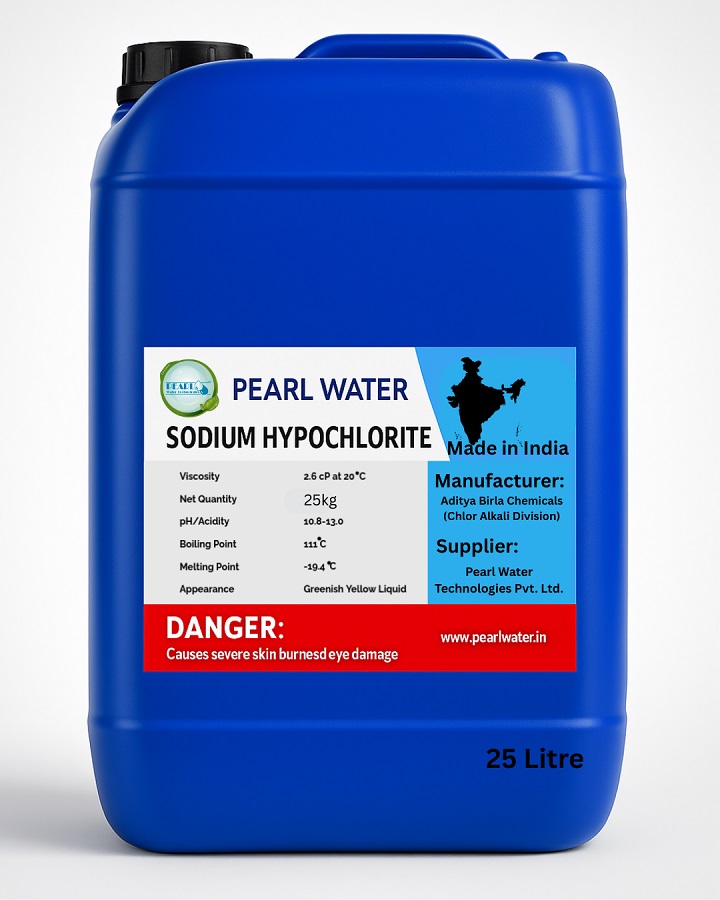
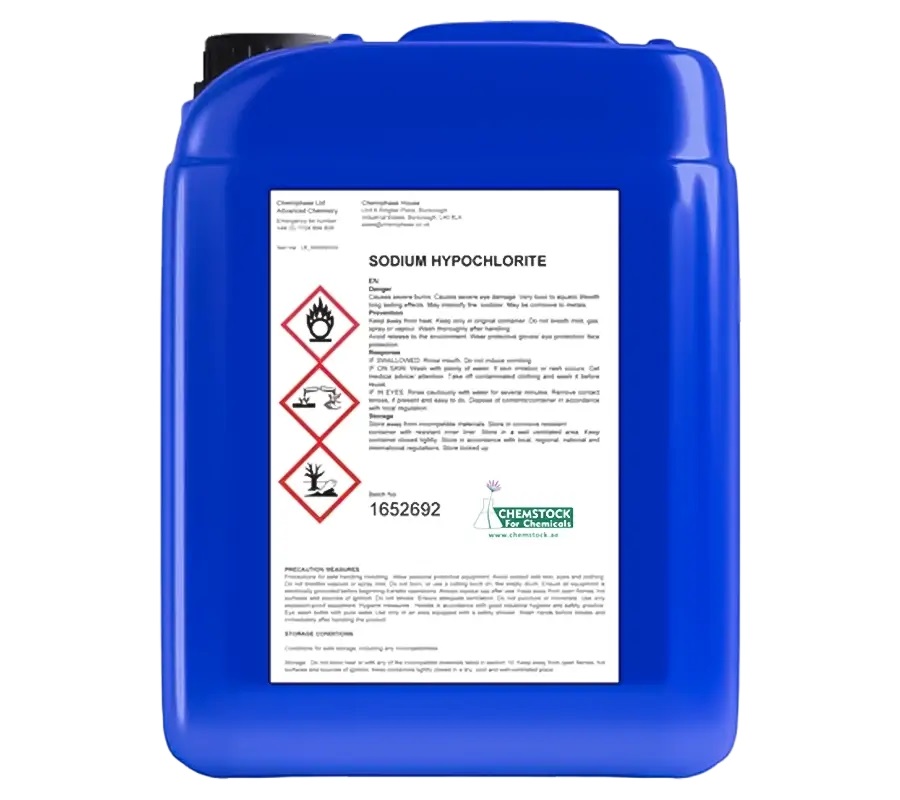
Sodium Hypochlorite- 5kgs
KSh 3,000.00
Sodium Hypochlorite
Sodium Hypochlorite is a fast-acting liquid chlorine disinfectant for swimming pools. This powerful sanitizer eliminates bacteria, viruses, and algae through rapid oxidation. Ideal for commercial pools, hotels, resorts, and shock treatment, Sodium Hypochlorite offers immediate disinfection with no cyanuric acid or calcium addition. Egret Swimming Pools supplies high-quality Sodium Hypochlorite to residential and commercial customers across Kenya. Order today for reliable pool water sanitation and expert technical support.
Verified Technical Specifications
| Specification | Verified Information |
| Active Ingredient | Sodium Hypochlorite (NaOCl) |
| Molecular Formula | ClNaO |
| Molecular Weight | 74.44 g/mol |
| CAS Number | 7681-52-9 |
| Form | Liquid solution |
| Appearance | Colorless to slightly yellow liquid |
| Primary Purpose | Fast-acting liquid disinfectant |
| Typical Usage | Commercial pools and shock treatment |
Specification details not provided in the supplied reference material. The table above reflects only information from the referenced guide.
Contact us
- 📍 Location: Next to Total Petrol Station Kihunguro, Thika Road
- 📞 Call/WhatsApp: +254726545148
- 📧 Email: info@egretswimmingpools.co.ke | egreteswimmingpools@gmail.com
- 🕒 Working Hours: Mon – Sat 8:30AM – 5PM
Description
Sodium Hypochlorite – Liquid Chlorine for Swimming Pools in Kenya
Product Data
| Attribute | Verified Information |
| Product Name | Sodium Hypochlorite |
| Chemical Category | Disinfection and Sanitation Chemicals |
| Active Ingredient | NaOCl Solution |
| Chemical Formula | ClNaO / NaOCl |
| Alternative Names | Liquid Chlorine, Bleach |
| Primary Purpose | Fast-acting liquid disinfectant |
| Typical Usage | Commercial pools and shock treatment |
Sodium Hypochlorite – Product Overview
Sodium Hypochlorite is a fast-acting liquid chlorine disinfectant widely used in swimming pool water treatment across Kenya and East Africa. As a sodium salt of hypochlorous acid, it serves as a powerful oxidizing agent that eliminates bacteria, viruses, and algae from pool water. Sodium Hypochlorite is commonly referred to as liquid chlorine or bleach and is particularly valued for its rapid disinfection capabilities in commercial pool operations, hotels, resorts, and large-scale aquatic facilities.
Sodium Hypochlorite is the sodium salt of hypochlorous acid, containing a hypochlorite ion (OCl⁻) that acts as the active disinfecting agent. When dissolved in water, it forms hypochlorous acid (HOCl), the active species responsible for microbial inactivation. The chemical formula is ClNaO with a molecular weight of 74.44 g/mol. Commercial solutions typically range from 5% to 15% available chlorine, with household bleach containing approximately 3-8% sodium hypochlorite.
In the swimming pool industry, Sodium Hypochlorite occupies a unique position as the preferred liquid disinfectant for commercial applications. Unlike granular or tablet chlorine forms, liquid chlorine offers immediate availability and ease of dosing, making it especially suitable for pools with high bather loads and fluctuating sanitation demands.
Egret Swimming Pools supplies high-quality Sodium Hypochlorite to pool owners, maintenance companies, hotels, and commercial facilities throughout Kenya. As a trusted pool chemical supplier based in Kihunguro, Ruiru, we provide technical expertise alongside quality products to ensure optimal pool water treatment outcomes.
How It Works
Sodium Hypochlorite functions through oxidation—a chemical process that destroys microorganisms by breaking down their cellular structures. When added to pool water, Sodium Hypochlorite (NaOCl) dissociates into sodium ions (Na⁺) and hypochlorite ions (OCl⁻). The hypochlorite ions then react with water to form hypochlorous acid (HOCl), the primary disinfecting agent.
Hypochlorous acid penetrates bacterial cell walls and oxidizes essential cellular components, including proteins and enzymes, leading to cell death. This oxidation mechanism is rapid and broad-spectrum, effective against bacteria, viruses, fungi, and algae.
Key Chemical Reaction:
NaOCl + H₂O → HOCl + NaOH
The hypochlorous acid (HOCl) is a neutral molecule that can easily penetrate negatively charged bacterial cell walls, making it approximately 80-100 times more effective than the hypochlorite ion (OCl⁻). This explains why pH control is critical—lower pH levels shift the equilibrium toward HOCl, maximizing disinfection efficiency .
A significant characteristic of Sodium Hypochlorite is its alkalinity. The reaction produces sodium hydroxide (NaOH), which raises the pool water pH. This pH increase must be monitored and managed, typically by adding pH Minus (acid) to maintain optimal disinfection conditions .
Sodium Hypochlorite is also a powerful oxidizer that breaks down organic contaminants—including sweat, body oils, urine, and cosmetic residues—reducing combined chlorine (chloramines) formation and eliminating unpleasant odors associated with chloramines .
Why It Matters
Sodium Hypochlorite is a cornerstone of public health protection in swimming pools. Proper pool water disinfection prevents the transmission of waterborne illnesses that can cause gastrointestinal, respiratory, and skin infections. Inadequate sanitation poses serious health risks to swimmers, particularly in high-use commercial pools.
In Kenya, where pools experience high UV exposure and fluctuating temperatures, maintaining consistent sanitation levels is essential. Sodium Hypochlorite’s fast-acting nature ensures rapid pathogen inactivation when dosing is correctly managed .
For commercial pool operators—including hotels, resorts, schools, and water parks—reliable disinfection is not optional but mandatory. Regulatory compliance requires maintaining free chlorine residuals within specified ranges, typically 1-4 mg/L in public pools . Failure to meet these standards can result in facility closures, reputational damage, and legal liability.
From an operational perspective, Sodium Hypochlorite offers distinct advantages:
- Immediate availability: No dissolution time required
- Ease of dosing: Can be accurately metered with chemical feed pumps
- No byproduct concerns: Does not introduce cyanuric acid (stabilizer) or calcium hardness
- Cost-effectiveness: Often more economical than granular alternatives for large pools
Egret Swimming Pools understands the critical role of reliable sanitation in pool operations. We supply Sodium Hypochlorite to facilities across Kenya, supporting pool managers and maintenance teams with expert guidance and quality products.
Key Benefits
- Rapid Disinfection Action
Sodium Hypochlorite acts immediately upon application, providing rapid bacteria and virus inactivation. This fast action makes it ideal for commercial pools requiring constant sanitation. The prompt effect ensures swimmer safety from the moment of application. - Effective Against a Broad Spectrum of Pathogens
Liquid chlorine eliminates bacteria (E. coli, Pseudomonas), viruses, and algae with high efficacy. This broad-spectrum activity is essential for maintaining comprehensive water hygiene in pools used by multiple bathers. - No Stabilizer Buildup
Unlike chlorinated isocyanurates (trichlor, dichlor), Sodium Hypochlorite does not contain cyanuric acid. This allows pool operators to maintain stable chlorine activity without the risk of over-stabilization, which can reduce chlorine effectiveness. - No Calcium Addition
Sodium Hypochlorite does not contribute to calcium hardness, unlike calcium hypochlorite (Chlorine 65%). This is particularly beneficial for pools already prone to calcium scale formation, allowing easier water balance management. - Ease of Automation
Liquid chlorine can be precisely dosed using chemical feed pumps and automated controllers. This automation capability reduces manual handling errors, maintains consistent residuals, and improves operational efficiency in commercial facilities. - Cost-Effective for Large Pools
For high-volume pools with significant chlorine demand, Sodium Hypochlorite often provides the most economical sanitation solution. Bulk procurement and automated dosing further enhance cost efficiency. - Versatile Application
Sodium Hypochlorite serves both routine chlorination and shock treatment requirements. Its dual functionality reduces the need for multiple chemical products, simplifying pool maintenance programs.
Problem-Solution Table
| Problem | Likely Cause | How Product Helps | Expected Outcome |
| High bacteria levels | Insufficient sanitizer | Provides rapid disinfection | Safe, hygienic water |
| Green water | Algae growth | Oxidizes and destroys algae | Clear, algae-free water |
| Cloudy water | Organic contamination | Breaks down organics | Improved clarity |
| Strong chlorine odor | Chloramines formation | Destroys combined chlorine | Odor elimination |
| Eye/skin irritation | Inadequate oxidation | Removes irritants | Comfortable swimming |
| Fecal contamination | Swimmer incident | Immediate sanitation | Restoration to safe levels |
Dosage & Application Guidance
Dosage requirements vary depending on manufacturer specifications, pool volume, contaminant load, water chemistry, bather load, environmental conditions, and treatment objectives. Always follow product label instructions and professional water test results.
General swimming pool industry guidance suggests:
- Routine chlorination: Target free chlorine residual of 1-4 mg/L
- Shock treatment: Higher doses applied as needed after heavy bather loads, rainfall, or contamination events
- Normal chlorine dosage: Apply evening or during low-UV periods to minimize sunlight degradation
For precise dosing, confirm the concentration of your Sodium Hypochlorite solution (typically 5-15% available chlorine). Calculate required volume based on pool volume and desired chlorine residual increase. A professional water test kit (DPD tablets) should be used to verify residual levels.
Water Balance Reference Table
The values below represent general swimming pool industry guidance and are not specifications of the product described on this page. Actual operating targets may vary depending on local regulations, pool type, water source, equipment design, and operating objectives.
| Parameter | Recommended Range | Notes |
| Free Chlorine | 1.0 – 4.0 mg/L | Public pools: 1-4 mg/L |
| pH | 7.2 – 7.8 | Optimal chlorine effectiveness at lower pH |
| Total Alkalinity | 80 – 120 mg/L | Buffer capacity |
| Calcium Hardness | 250 – 350 mg/L | Prevents scaling/corrosion |
| Combined Chlorine | < 0.5 mg/L | Indicates chloramine presence |
Step-by-Step Application Guide
Before Treatment:
- Test pool water using a DPD test kit to determine current free chlorine level, pH, and combined chlorine
- Check that pH is within the acceptable range (7.2-7.8). Adjust pH if necessary as chlorine is most effective at lower pH values
- Calculate dosage based on pool volume and desired chlorine increase
- Ensure pool is free of swimmers during treatment
During Treatment:
- Apply Sodium Hypochlorite directly to the pool water while circulation system is running
- Add the chemical in front of return jets for even distribution
- For shock treatment, apply during evening hours to minimize UV degradation
- Never mix Sodium Hypochlorite with other chemicals, particularly acids
After Treatment:
- Continue pump operation for at least 4 hours after application
- Re-test free chlorine level after 4-6 hours
- Ensure residual is within acceptable range before allowing swimmers
- Post warning signs during treatment until water is safe for swimming
Testing and Monitoring:
- Test free chlorine daily for commercial pools
- Test combined chlorine weekly
- Maintain regular water balance records
- Adjust dosing based on bather load and weather conditions
Troubleshooting:
- If chlorine residual is too low: Increase dosing rate or check for high chlorine demand
- If chlorine residual is too high: Reduce dosing or allow dissipation
- If combined chlorine exceeds 0.5 mg/L: Shock treat to break down chloramines
Kenya & East Africa Usage Guide
The tropical climate of Kenya and East Africa creates unique conditions that significantly influence pool chemical requirements.
- High UV Exposure
Kenya’s location near the equator results in intense solar radiation. Sunlight degrades free chlorine rapidly—studies indicate chlorine is oxidized by sunlight, with up to 50% loss within two hours of peak exposure. This means pools require higher chlorine demand during daylight hours. Evening application of Sodium Hypochlorite is recommended for shock treatment to minimize UV degradation. - Rainy Seasons
Heavy rainfall introduces organic contaminants, runoff pollutants, and dilution effects. Rainwater can carry dust, pollen, and agricultural residues into pools, increasing chlorine demand. After stormy rainfall, shock treatment is recommended to restore water quality. Pool operators should anticipate higher chlorine consumption during rainy periods. - Dust and Organic Contamination
Dry dusty conditions in many parts of Kenya contribute to particulate contamination. Combined with organic matter from leaves, insects, and environmental debris, this increases chlorine demand. Sodium Hypochlorite’s oxidation capability is particularly effective at breaking down these organic contaminants. - Hotel and Commercial Pools
East Africa’s hospitality sector experiences high seasonal bather loads. Hotels, resorts, and safari lodges require robust sanitation systems. Sodium Hypochlorite is widely used in these settings due to its ease of automation and rapid disinfection action. Daily monitoring and dosing adjustments are essential to maintain water quality. - Coastal Pools
Pools in coastal areas face additional challenges including salt spray, higher temperatures, and humidity. Salt spray can introduce contaminants that affect water chemistry. Pool operators should implement rigorous monitoring programs and consider more frequent filtration backwashing. - Inland Pools
Inland pools, particularly in high-altitude areas like Nairobi and Rift Valley regions, face cooler nights and intense daytime UV. These temperature fluctuations can affect chlorine stability and water balance parameters.
Egret Swimming Pools provides Sodium Hypochlorite solutions tailored to Kenya’s unique pool maintenance challenges. Our technical expertise helps pool operators optimize treatment programs for regional conditions.
Commercial Applications
Sodium Hypochlorite is the disinfectant of choice for commercial pool operations across Kenya:
- Hotels and Resorts:Hotels operate pools daily with varying bather loads. Automated dosing systems with Sodium Hypochlorite ensure consistent sanitation, protecting guest health and maintaining reputation .
- School and University Pools:Educational facilities require reliable disinfection for student safety. Liquid chlorine’s fast action and ease of monitoring make it suitable for these applications.
- Health Clubs and Gyms:Fitness facilities demand rigorous water quality standards. Sodium Hypochlorite provides the sanitation necessary for pools used by multiple users throughout the day.
- Water Parks:High-volume water attractions require continuous disinfection. Liquid chlorine systems can be sized to meet the large chlorine demands of water parks.
- Property Management Companies:Managed apartment complexes and residential estates benefit from Sodium Hypochlorite’s consistent performance, supporting maintenance teams in keeping pools safe for residents.
- Pool Maintenance Companies:Professional pool service providers rely on Sodium Hypochlorite for its predictable performance and ease of handling. Bulk procurement offers cost advantages for maintenance contracts.
Residential Applications
Private homes with swimming pools in Kenya increasingly use Sodium Hypochlorite as part of their pool maintenance routine. Residential pool owners appreciate:
- Simplicity of Use:Liquid chlorine can be added directly to the pool without special handling equipment.
- Predictable Results:Consistent product strength allows accurate dosing once the pool volume is known.
- Versatility:Suitable for both routine chlorination and shock treatment.
- Cost-Effectiveness:Often more economical than tablet forms, particularly for larger residential pools.
Holiday homes and Airbnb properties benefit from Sodium Hypochlorite’s immediate disinfection action—essential when preparing pools for guest arrivals.
Safety & Handling
Sodium Hypochlorite is a strong oxidizer and corrosive chemical requiring careful handling. The following safety recommendations are based on general swimming pool industry and commercial facility guidance:
Storage:
- Store in a cool, dry, well-ventilated area away from direct sunlight and moisture
- Keep away from acids, ammonia, and other pool chemicals—especially pH adjusters and chlorinated products
- Store chemicals separately to prevent accidental mixing
- Ensure containers are tightly sealed
- Keep away from mechanical equipment and volatile materials
Personal Protective Equipment (PPE):
- Eye protection (chemical goggles)
- Impermeable gloves (nitrile or neoprene)
- Non-slip boots
- Apron or coverall
Mixing Precautions:
- Never mix Sodium Hypochlorite with other chemicals—especially acids
- Never combine with ammonia products (dangerous chlorine gas formation)
- Always add chemicals to water, never water to chemicals
Spill Response:
- Ventilate the area
- Use PPE during clean-up
- Absorb liquid with inert material
- Dispose of in accordance with local regulations
First Aid:
- Eye contact: Irrigate with running water for at least 15 minutes, seek medical attention
- Skin contact: Rinse thoroughly with water, remove contaminated clothing
- Inhalation: Move to fresh air, seek medical attention if symptoms occur
- Ingestion: Do not induce vomiting, rinse mouth with water, seek immediate medical advice
Disposal:
- Follow local environmental codes and regulations for chemical disposal
- Do not pour excess chemicals into drains or water bodies
- Dispose of empty containers safely
Product Comparison
Sodium Hypochlorite is commonly compared with Calcium Hypochlorite (Chlorine 65%), both belonging to the same chemical category of pool disinfectants:
| Feature | Sodium Hypochlorite | Chlorine 65% |
| Active Ingredient | NaOCl Solution | Calcium Hypochlorite (Ca(OCl)₂) |
| Primary Purpose | Fast-acting liquid disinfectant | Sanitizes pool water |
| Typical Usage | Commercial pools and shock treatment | Daily chlorination and shock |
| Form | Liquid solution | Granular solid |
| Calcium addition | None | Adds calcium hardness |
| pH impact | Raises pH | Raises pH (requires acid addition) |
Selecting the appropriate chlorine source depends on pool type, size, equipment, and operator preference. Egret Swimming Pools can advise on the optimal choice for your specific pool.
Cross-Selling Recommendations
- pH Minus
Sodium Hypochlorite raises pH. pH Minus (Sodium Bisulfate or diluted acid) corrects this increase, maintaining optimal pH 7.2-7.8 for chlorine effectiveness and swimmer comfort. - DPD Tablets
Regular testing is essential when using liquid chlorine. DPD Tablets measure free chlorine accurately, ensuring safe residuals (1-4 mg/L) and identifying when shock treatment is required. - Flocculant
For cloudy water caused by organic contamination, flocculant complements chlorine oxidation by removing suspended particles. - Sodium Bicarbonate
Alkalinity supports chlorine stability. Sodium Bicarbonate raises total alkalinity, providing buffering capacity against pH fluctuations. - Algaecide
Preventative algaecide treatment reduces chlorine demand by controlling algae growth.
Buying Guide
How to Choose Sodium Hypochlorite
When purchasing Sodium Hypochlorite for your pool, consider:
- Concentration: Available chlorine strength typically ranges from 5-15%. Higher concentrations offer greater chlorine per liter but require careful handling
- Packaging: Bulk containers (20L, 50L, 200L) offer best value for commercial operations. Smaller containers suit residential pools
- Shelf Life: Hypochlorite solutions decompose over time. Check manufacturing dates and rotate stock
Common Mistakes to Avoid
- Overdosing: Excessive chlorine causes eye/skin irritation and equipment corrosion
- Underdosing: Insufficient chlorine leads to water quality issues and health risks
- Mixing chemicals: Never combine with acids or other pool chemicals—dangerous reactions occur
- Applying in daylight: Chlorine degrades in sunlight; shock treat in the evening when possible
- Inaccurate testing: Use DPD test tablets, not test strips, for reliable chlorine measurement
What Professionals Recommend
- Test free chlorine levels daily
- Maintain free chlorine between 1-4 mg/L
- Shock treat after heavy bather loads or rainfall
- Adjust dosing based on actual test results, not schedules
- Rotate chemicals to ensure fresh supply
- Keep detailed water quality records
Sodium Hypochlorite – FAQs
- What is Sodium Hypochlorite used for in swimming pools?
Sodium Hypochlorite is used as a fast-acting liquid chlorine disinfectant to sanitize pool water by eliminating bacteria, viruses, and algae. - How is Sodium Hypochlorite different from other pool chlorine?
Sodium Hypochlorite is a liquid chlorine that acts immediately, contains no cyanuric acid or calcium, and is ideal for commercial pools and shock treatment. - Can Sodium Hypochlorite be used in residential pools?
Yes, Sodium Hypochlorite is suitable for residential pools, offering fast disinfection and cost-effective treatment, particularly for larger pools. - Does Sodium Hypochlorite raise pool pH?
Yes, Sodium Hypochlorite raises pool pH due to the sodium hydroxide formed in the reaction, requiring pH adjustment with pH Minus. - How should Sodium Hypochlorite be stored?
Store Sodium Hypochlorite in a cool, dry, dark place, away from acids and other pool chemicals. Ensure containers are sealed and ventilated. - How often should I add Sodium Hypochlorite to my pool?
Dosing frequency depends on bather load, UV exposure, and environmental conditions. Test chlorine levels daily and adjust accordingly. - Is Sodium Hypochlorite safe for swimmers?
Yes, when maintained at recommended levels (1-4 mg/L free chlorine), Sodium Hypochlorite is safe for swimmers and protects against waterborne illness.
Summary
Sodium Hypochlorite is a fast-acting liquid chlorine disinfectant for swimming pools. It eliminates bacteria, viruses, and algae through oxidation. Ideal for commercial pools, hotels, resorts, and shock treatment. Its key advantage is immediate action, no stabilizer buildup, and ease of automated dosing. Egret Swimming Pools supplies quality Sodium Hypochlorite in Kenya, providing technical support for effective pool water treatment.
Want to Ensure Your Pool Water is Safe and Clear?
Choose Egret Swimming Pools for premium Sodium Hypochlorite and expert pool water treatment advice. We serve residential pool owners, commercial facilities, hotels, schools, and property management companies across Kenya and East Africa.
- 📍 Location: Next to Total Petrol Station Kihunguro, Thika Road
- 📞 Call/WhatsApp: +254726545148
- 📧 Email: info@egretswimmingpools.co.ke | egreteswimmingpools@gmail.com
- 🕒 Working Hours: Mon – Sat 8:30AM – 5PM
Bulk orders welcome. Commercial contracts available. Let our pool chemistry specialists help you choose the right treatment program.
Reviews
There are no reviews yet.