
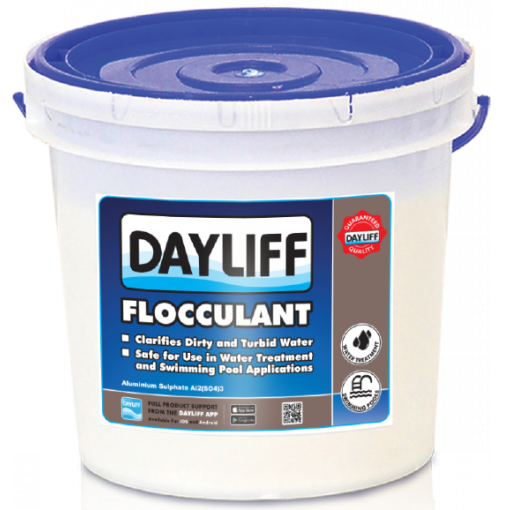
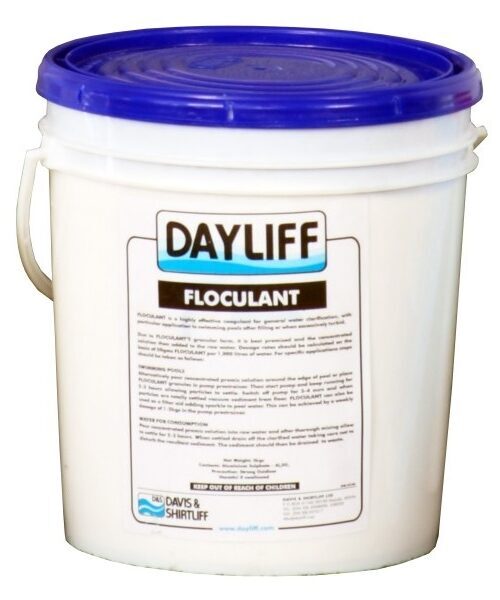
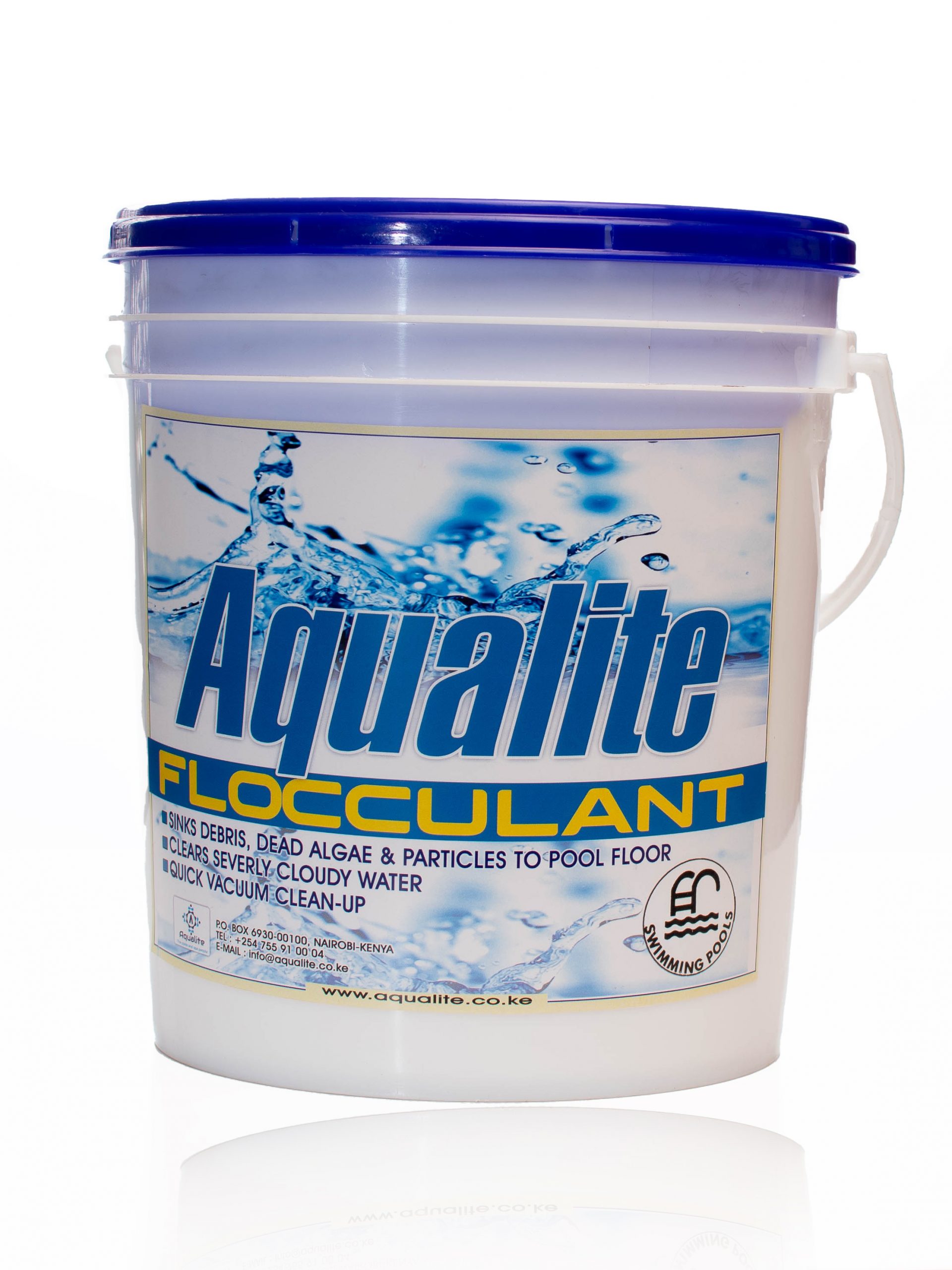
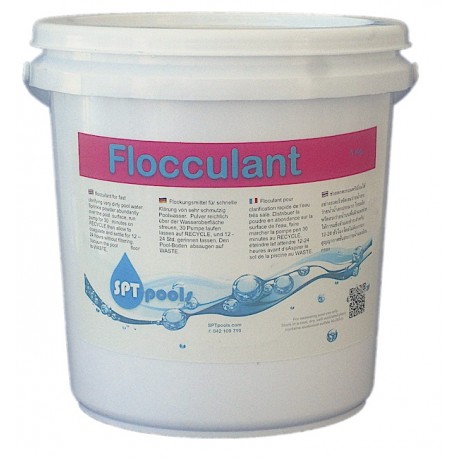
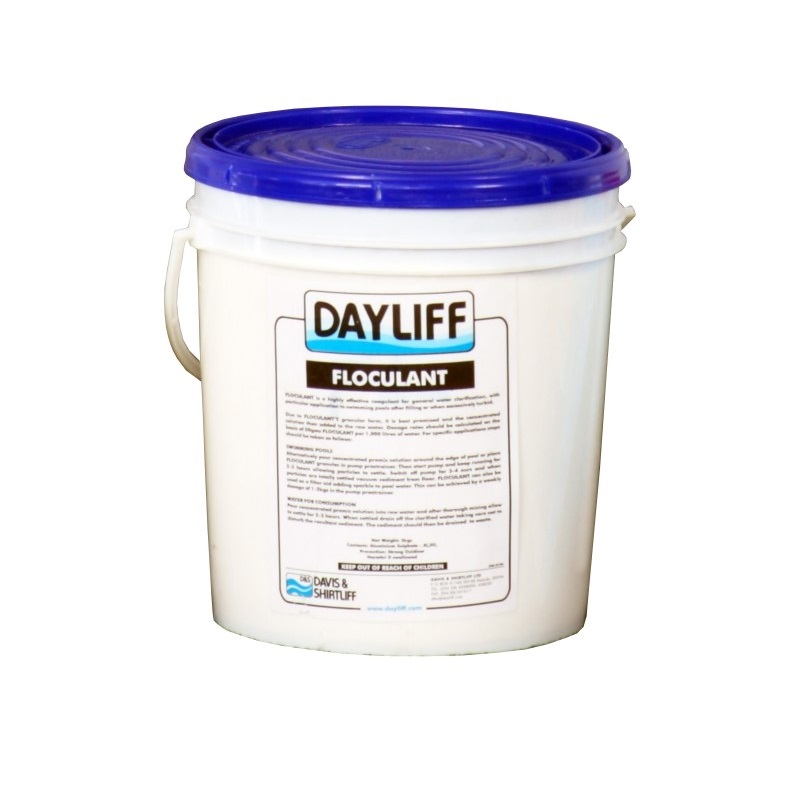
Flocculant- 5Kgs
KSh 1,800.00
Flocculant
What is Flocculant?
Flocculant is a powerful water clarification chemical that clears cloudy swimming pools by causing suspended particles to settle to the floor. Contains PAC or polymer flocculant. Ideal for treating cloudiness after heavy rain, algae treatment, or high bather loads. Easy to use: apply, allow settling, vacuum to waste. Egret Swimming Pools supplies quality flocculant across Kenya with expert technical support.
Verified Technical Specifications
| Specification | Verified Information |
| Product Name | Flocculant |
| Chemical Category | Water Clarification & Flocculation Chemicals |
| Active Ingredient | Poly Aluminium Chloride (PAC) or Polymer Flocculant |
| Chemical Formula | Specification not provided in supplied reference material |
| Alternative Names | Pool Floc, Settling Agent |
| Primary Purpose | Causes suspended particles to settle |
| Typical Usage | Cloudy water treatment |
| Application Method | Liquid, poured directly into pool |
Specification details not provided in the supplied reference material. The table above reflects only information from the referenced guide.
Contact us
- 📍 Location: Next to Total Petrol Station Kihunguro, Thika Road
- 📞 Call/WhatsApp: +254726545148
- 📧 Email: info@egretswimmingpools.co.ke | egreteswimmingpools@gmail.com
- 🕒 Working Hours: Mon – Sat 8:30AM – 5PM
Description
Flocculant – Pool Water Clarification & Flocculation Chemical in Kenya
Product Data
| Attribute | Verified Information |
| Product Name | Flocculant |
| Chemical Category | Water Clarification & Flocculation Chemicals |
| Active Ingredient | Poly Aluminium Chloride (PAC) or Polymer Flocculant |
| Chemical Formula | Not specified in reference material |
| Alternative Names | Pool Floc, Settling Agent |
| Primary Purpose | Causes suspended particles to settle |
| Typical Usage | Cloudy water treatment |
Flocculant
Product Overview
Flocculant is a specialized swimming pool water treatment chemical designed to clarify cloudy water by causing suspended particles to settle to the pool floor. As a member of the water clarification and flocculation chemical category, flocculant contains either Poly Aluminium Chloride (PAC) or polymer flocculant as its active ingredient, providing effective particle aggregation that restores water clarity.
Cloudy pool water is one of the most common and frustrating problems faced by pool owners. The haze is caused by microscopic particles suspended in the water—including dead algae, organic matter, dust, skin cells, and fine debris—that are too small to be captured by standard filtration systems. Flocculant solves this problem by chemically binding these tiny particles together into larger clumps (flocs) that can be filtered out or vacuumed away.
Flocculant is distinct from clarifiers in that it causes particles to sink to the bottom rather than simply making them filterable. This “settling” action is particularly useful when dealing with heavy cloudiness or when the filtration system is not powerful enough to capture fine particles. The settled debris can then be vacuumed to waste, removing the contaminants entirely from the pool system.
In the pool maintenance industry, flocculant is recognized as the go-to solution for stubborn cloudiness that clarifiers cannot resolve. It is often used as a “shock treatment” for water clarity, delivering rapid results when pool water turns hazy after heavy use, rain, or algae treatment.
Egret Swimming Pools supplies premium flocculant products to residential and commercial pool owners across Kenya. As a trusted pool chemical supplier based in Kihunguro, Ruiru, we provide quality water clarification solutions backed by expert technical advice.
How It Works
Flocculant works through a sophisticated chemical process that transforms cloudy water into clear water in a matter of hours. Understanding this mechanism helps pool owners appreciate why flocculant is so effective for stubborn clarity issues.
The Chemistry of Flocculation:
Flocculant contains positively charged polymers or metal ions (from PAC) that interact with negatively charged suspended particles in pool water. The process unfolds in several stages:
- Coagulation – Charge Neutralization
Most suspended particles in pool water carry a negative electrical charge. This charge causes particles to repel each other, keeping them suspended and creating the cloudy appearance. Flocculant introduces positively charged molecules that neutralize the negative charges on particles.
When the charges are neutralized, particles can now approach each other without repulsion. This is the critical first step that enables the aggregation process.
- Flocculation – Particle Bridging
Once particles are neutralized, the flocculant molecules act as “bridges” between particles. Long polymer chains or PAC molecules connect multiple particles together, forming larger and larger aggregates. This process is called bridging.
The bridging action continues until visible “flocs” form—soft, fluffy clumps that are large and heavy enough to settle by gravity.
- Sedimentation – Particle Settling
The flocs formed during flocculation are significantly heavier than the original suspended particles. They settle to the pool floor under the influence of gravity, forming a layer of debris that can be vacuumed away.
This settling process typically takes 4-12 hours, depending on the product, pool conditions, and water temperature.
- Filtration – Mechanical Removal
While flocculant causes settling, some finer flocs may remain suspended or be captured by the filter. Running the pump during the flocculation process (or in the case of clarifier-type flocculants) helps the filter capture flocculated particles.
Difference Between Flocculant and Clarifier:
| Aspect | Flocculant | Clarifier |
| Mechanism | Particles settle to bottom | Particles become filterable |
| Action | Coagulation and settling | Coagulation only |
| Result | Visible debris on floor | Particles captured in filter |
| Application | Vacuum to waste required | Backwash after filtration |
| Strength | Strong, heavy-duty | Mild, maintenance |
Why It Matters
 Pool water clarity is not just about aesthetics—it has significant implications for safety, enjoyment, and pool maintenance. Understanding why clarity matters helps pool owners appreciate the importance of flocculant in their chemical program.
- Health and Safety:
Cloudy water poses serious safety risks. Swimmers cannot see the bottom, increasing the risk of diving accidents. Additionally, cloudy water can mask the presence of contaminants, allowing bacteria to thrive despite adequate chlorine levels. By restoring clarity, flocculant contributes to pool safety. - Swimmer Confidence:
Clear water is the most visible indicator of pool cleanliness. Swimmers are more confident in the safety and hygiene of clear water. Cloudy water, by contrast, creates doubt and can reduce pool use. - Aesthetic Appeal:
Clear, sparkling pool water is visually appealing and enhances the enjoyment of the pool environment. For commercial facilities, water clarity directly impacts guest satisfaction and the perceived quality of the establishment. - Equipment Protection:
Suspended particles can clog filters, reduce pump efficiency, and damage pool equipment. By removing these particles, flocculant helps protect the filtration and circulation system. - Chemical Efficiency:
Suspended particles consume chlorine and other chemicals, increasing demand. By removing particulate matter, flocculant helps chlorine work more effectively on sanitation rather than oxidation. - Cost Savings:
Preventing and correcting cloudiness with flocculant is significantly cheaper than the alternative: draining and refilling the pool. Drain and refill costs include water costs, chemical costs to rebalance, and downtime. - Regulatory Compliance:
Commercial pools must maintain water clarity to meet regulatory standards. Cloudy water can result in facility closure and regulatory penalties. Flocculant helps commercial operators maintain compliance.
Key Benefits
- Rapid Cloudy Water Correction
Flocculant delivers fast results, typically clearing cloudy water within 4-12 hours. This rapid action means less downtime and quicker restoration of pool enjoyment. For commercial pools, this rapid resolution is particularly valuable.- Why it matters: Fast results minimize inconvenience and service disruption.
- Practical outcome: Pool water restored to clarity within a day.
- Removes Stubborn Fine Particles
Standard filtration systems cannot capture particles smaller than 10-20 microns. Flocculant aggregates these fine particles into large flocs that can be vacuumed away or captured by the filter, removing contaminants that otherwise persist.- Why it matters: Filtration alone is often insufficient for crystal-clear water.
- Practical outcome: Removal of particles that regular filtration misses.
- Works When Filtration is Inadequate
If your filtration system is undersized, aging, or not running long enough, flocculant provides an alternative to upgrading equipment. While not a substitute for proper filtration, flocculant offers a temporary solution for clarity issues.- Why it matters: Avoids expensive equipment upgrades for occasional clarity problems.
- Practical outcome: Clear water even with marginal filtration.
- Essential After Algae Treatment
Algae treatments leave behind dead algae cells that cloud the water. Flocculant removes these dead cells, restoring clarity after the algae has been killed. This is a critical step in complete algae remediation.- Why it matters: Without flocculant, water may remain cloudy after algae is dead.
- Practical outcome: Clear water following algae treatment.
- Reduces Chlorine Demand
Suspended organic particles consume chlorine, increasing chemical costs. By removing these particles, flocculant reduces chlorine demand and helps maintain consistent sanitizer levels.- Why it matters: Lower chlorine consumption saves money and reduces handling.
- Practical outcome: More efficient water sanitation.
- Prevents Filter Clogging
Suspended particles rapidly clog filters, reducing flow rates and requiring frequent backwashing. Flocculant removes these particles, extending filter run times and reducing maintenance frequency.- Why it matters: Reduced filter maintenance saves time and water.
- Practical outcome: Less frequent backwashing and lower water consumption.
- Restores Sparkle and Brilliance
Beyond simply clearing cloudiness, flocculant helps restore the “sparkle” that makes pool water inviting. The removal of microscopic particles allows light to penetrate properly, creating that desirable shimmering effect.- Why it matters: Visual appeal enhances pool enjoyment and satisfaction.
- Practical outcome: Inviting, sparkling pool water.
Problem-Solution Table
| Problem | Likely Cause | How Product Helps | Expected Outcome |
| Cloudy water after shocking | Dead algae or organic particles | Aggregates and settles particles | Clear water |
| Hazy water despite good chemistry | Fine suspended particles | Flocculates particles for removal | Crystal-clear water |
| Cloudy water after heavy rain | Runoff contaminants | Settles introduced particles | Restored clarity |
| Water clarity declines with bather load | Body oils, skin cells, cosmetics | Removes bather-introduced particles | Maintained clarity |
| Filter not clearing water | Undersized or poor filter | Supplements filtration | Clear water without upgrade |
| Water sparkle lacking | Microscopic particles | Removes haze-causing particles | Sparkling appearance |
| Post-algae treatment cloudiness | Dead algae cells | Settles dead algae | Complete algae removal |
Dosage & Application Guidance
Dosage requirements vary depending on manufacturer specifications, pool volume, contaminant load, water chemistry, bather load, environmental conditions, and treatment objectives. Always follow product label instructions and professional water test results.
General swimming pool industry guidance for flocculant use:
Flocculant Application (Settling Type):
- Dose rate: Typically 50-100 mL per 10,000 liters (consult product label)
- Apply directly to pool water while pump is running
- Run pump for approximately 1-2 hours after application for distribution
- Turn pump OFF and allow particles to settle overnight (8-12 hours)
- Vacuum settled debris to waste (not through filter)
- Dispose of vacuumed water properly
Flocculant/Clarifier Combination (Filterable Type):
- Dose rate: Typically 50-100 mL per 10,000 liters
- Apply directly to pool water
- Run pump continuously for 24-48 hours
- Backwash filter when pressure rises 25-30% above normal
- May require repeat application for heavy cloudiness
Important Considerations:
- Flocculant is not a routine maintenance product; it is used as needed when clarity issues arise
- Check pH before application; adjust to 7.2-7.6 for optimal results
- Some flocculant formulations are compatible with chlorine; follow label instructions
- After flocculation, the pool will appear cloudy with visible flocs; this is expected
Water Balance Reference Table
The values below represent general swimming pool industry guidance and are not specifications of the product described on this page. Actual operating targets may vary depending on local regulations, pool type, water source, equipment design, and operating objectives.
| Parameter | Recommended Range | Notes |
| Free Chlorine | 1.0 – 4.0 mg/L | Maintain adequate sanitizer levels |
| pH | 7.2 – 7.6 | Flocculant performs best in this range |
| Total Alkalinity | 80 – 120 mg/L | Buffer capacity |
| Calcium Hardness | 250 – 350 mg/L | Prevents scaling/corrosion |
| Combined Chlorine | < 0.5 mg/L | Indicates effective oxidation |
Step-by-Step Application Guide
Flocculant Treatment (Settling Method):
Before Treatment:
- Test water chemistry; adjust pH to 7.2-7.6
- Ensure chlorine levels are adequate
- Verify pool volume to calculate correct dose
- Remove automatic cleaners from pool
- Confirm you can vacuum to waste (not through filter)
During Treatment:
- Measure the correct amount of flocculant
- Pour directly into the pool water while walking around the perimeter
- Pour in front of return jets for even distribution
- Run the pump for 1-2 hours to distribute flocculant
After Treatment – Settling Phase:
- Turn pump OFF (critical step for settling flocculant)
- Allow particles to settle for 8-12 hours (overnight is ideal)
- Do not disturb the water during settling
After Treatment – Removal Phase:
- Attach vacuum hose and set filter valve to “Waste”
- Slowly vacuum settled debris from pool floor
- Vacuum gently to avoid stirring up settled flocs
- Vacuum thoroughly, covering the entire floor area
- Top up pool with fresh water after vacuuming to waste
- Resume normal filtration
- Re-test water and adjust chemistry as needed
Flocculant/Clarifier Treatment (Filterable Method):
Before Treatment:
- Test water chemistry; adjust as needed
- Calculate dose based on pool volume
During Treatment:
- Apply flocculant directly to pool water
- Run pump continuously
After Treatment:
- Continue filtration for 24-48 hours
- Monitor filter pressure; backwash when pressure rises
- Re-test water and adjust chemistry
- Repeat if necessary for severe cloudiness
Testing and Monitoring:
- Test chlorine and pH before and after treatment
- Monitor water clarity hourly during treatment
- Check filter pressure regularly during filtration method
- Verify clarity before allowing swimming
Troubleshooting:
- Cloudiness persists: Repeat treatment; check pH was correct
- Flocs not settling: Check pump run time was insufficient; run slightly longer
- Flocs stirred up during vacuuming: Vacuum more slowly; be gentle
- Water remains cloudy but no flocs: May need clarifier instead (see comparison)
- Algae returns after treatment: Ensure algae was fully killed before flocculating
Kenya & East Africa Usage Guide
Flocculant is particularly important in Kenya’s pool environment, where water clarity challenges are common due to regional conditions.
- Rainy Season Cloudiness:
During Kenya’s rainy seasons, heavy rainfall introduces sediments, organic matter, and runoff contaminants. These particles cause significant cloudiness that may not resolve with filtration alone. Flocculant offers the rapid clarity restoration needed after rain events. - Dust and Particulate Contamination:
Kenya’s dry seasons bring significant dust that settles in pools. This fine dust can make water appear hazy or dull. Flocculant effectively removes these particles, restoring clarity. - High Bather Loads:
Hotels, resorts, and residential pools in Kenya experience high bather loads that introduce body oils, skin cells, and cosmetics. These materials contribute to cloudiness. Flocculant helps maintain clarity during peak usage periods. - Post-Algae Treatment:
Algae control is a significant challenge in Kenya’s warm climate. After treating algae with chlorine and algaecide, flocculant is essential to remove dead algae cells and restore water clarity. - Commercial Facility Demands:
Hotels and resorts in Kenya’s tourism industry cannot afford cloudy pool water. Flocculant provides the rapid clarity restoration needed to maintain guest satisfaction. - Coastal Pools:
Coastal pools face additional challenges from salt spray and high humidity. Flocculant helps manage the cloudiness that can result from these conditions. - Challenges with Water Quality:
Some areas in Kenya experience water quality issues with the fill water itself. High mineral content or turbidity in source water may require flocculant treatment to achieve clarity. - Varying Filtration Quality:
ot all pools in Kenya have state-of-the-art filtration systems. Flocculant helps compensate for older or undersized filters, allowing pool owners to maintain clarity without equipment upgrades.
Commercial Applications
Flocculant is essential for commercial pool operations:
- Hotels and Resorts:
Guest satisfaction depends on crystal-clear water. Flocculant is used as needed to maintain the high clarity standards required by the hospitality industry. - Water Parks:
Large water volume and high bather loads create significant clarity challenges. Flocculant helps manage these challenges efficiently. - Schools and Universities:
Educational facilities must maintain safe, inviting pool water. Flocculant supports the clarity needed for student programs. - Health Clubs and Gyms:
Members expect clean, clear pool water. Flocculant helps maintain water quality with minimal disruption to operations. - Competition Pools:
Competitive swimming requires exceptional water clarity. Flocculant ensures visibility for both swimmers and officials. - Apartment and Residential Complexes:
Managed pools need to maintain appeal for residents. Flocculant is used to address clarity issues that arise from regular use. - Pool Maintenance Companies:
Professional service providers include flocculant in their water clarification toolkit, using it as needed to resolve stubborn cloudiness.
Residential Applications
Flocculant serves residential pool owners facing clarity issues:
- Private Homes:
Homeowners dealing with cloudy water can use flocculant for rapid resolution. The settling method is straightforward for DIY application. - Holiday Homes:
Properties used intermittently may develop clarity issues. Flocculant quickly restores water clarity before guest arrival. - Airbnb Properties:
Investment property owners can use flocculant to ensure the pool looks its best for guest stays. - Apartment Complexes:
Residents in buildings with shared pools benefit from the rapid clarity restoration that flocculant provides.
Safety & Handling
Flocculant is generally safe when handled properly:
Storage:
- Store in a cool, dry, well-ventilated area
- Keep away from children and pets
- Store away from chlorine and oxidizers
- Ensure containers are tightly sealed
Personal Protective Equipment (PPE):
- Gloves when handling concentrated product
- Eye protection recommended
- Wash hands after handling
Handling Precautions:
- Do not mix with other chemicals unless specifically directed
- Avoid skin and eye contact
- Do not ingest
- Use in well-ventilated areas
- Keep product off pool surfaces and equipment
Spill Response:
- Absorb small spills with inert material
- Dilute large spills with water
- Prevent entry into drains or water bodies
- Follow local disposal regulations
Environmental Considerations:
- Do not allow flocculant to enter storm drains or natural water bodies
- Dispose of unused product according to local regulations
- Vacuumed waste water should be disposed of properly
First Aid:
- Eye contact: Flush with water for 15 minutes; seek medical attention
- Skin contact: Wash thoroughly with soap and water
- Inhalation: Move to fresh air
- Ingestion: Do not induce vomiting; seek immediate medical attention
Product Comparison
Flocculant is compared with clarifier to help pool owners choose the right product:
| Feature | Flocculant | Clarifier |
| Active Ingredient | PAC or Polymer Flocculant | Polymer Clarifier |
| Primary Purpose | Causes suspended particles to settle | Improves water clarity |
| Typical Usage | Cloudy water treatment | Continuous clarification |
| Application Frequency | As needed for cloudiness | Ongoing/regular |
| Mechanism | Settling to floor | Filtration improvement |
| Removal Method | Vacuum to waste | Filter backwash |
| Pump Operation | Off during settling | Continuous |
| Strength | Heavy-duty | Maintenance |
| Speed of Results | 8-12 hours | 24-48 hours |
The choice depends on the severity of cloudiness and pool operation preferences.
Cross-Selling Recommendations
- DPD Tablets
Test water before and after flocculant treatment. Accurate chlorine testing ensures proper sanitation throughout the clarification process. - Chlorine Sanitizer
Ensure adequate chlorine during and after flocculant treatment. Chlorine maintains sanitation while flocculant handles clarity. - pH Plus or pH Minus
Flocculant works best at pH 7.2-7.6. These products help achieve the optimal pH range for flocculation. - Algicide
After algae treatment, flocculant removes dead algae. Complete the process with algicide for ongoing algae prevention. - Shock Chlorine
Flocculant often follows shock treatment. Ensure you have shock chlorine available for complete water treatment. - Pool Vacuum
Flocculant requires vacuuming to waste. Ensure you have a working vacuum with waste capability.
Buying Guide
How to Choose Flocculant
- Product Type: Choose between settling type (vacuum to waste) and filterable type (backwash); settling type is more powerful
- Severity: For heavy cloudiness, settling flocculant is recommended; for mild haze, clarifier may suffice
- Pool Equipment: Ensure your filter valve allows vacuuming to waste if choosing settling flocculant
- Volume: Purchase quantity appropriate for your pool size
- Brand Quality: Choose reputable brands for reliable performance
Common Mistakes to Avoid
- Using flocculant routinely: Flocculant is a treatment, not a maintenance product
- Not adjusting pH first: Flocculant works best at specific pH
- Running pump during settling: This prevents flocs from settling
- Not vacuuming to waste: This sends flocs through filter, clogging it
- Swimming too soon: Wait until flocs are removed
- Overdosing: Follow label instructions
What Professionals Recommend
- Keep flocculant on hand for cloudy water emergencies
- Use settling type for severe cloudiness
- Test and adjust pH before application
- Vacuum to waste slowly and thoroughly
- Reserve flocculant for occasional use, not routine
Flocculant- FAQs
- What is flocculant used for in swimming pools?
Flocculant is used to clear cloudy pool water by causing suspended particles to settle to the floor for removal. - How does flocculant differ from clarifier?
Flocculant causes particles to settle; clarifier makes particles filterable. Flocculant is stronger and used for severe cloudiness. - How long does flocculant take to clear cloudy water?
Typically 8-12 hours for settling. Results appear overnight with proper application. - Can I swim after using flocculant?
Wait until flocs have settled and been vacuumed, and water is clear before swimming. Follow label instructions. - Do I need to run the pump when using flocculant?
Run the pump briefly for distribution, then turn it OFF for settling. For clarifier-type, run continuously. - Is flocculant safe for all pool types?
Yes, flocculant is safe for all pool types when used as directed. - Why is my pool still cloudy after using flocculant?
Possible reasons: pH was incorrect, pump ran during settling, or dose was insufficient.
Flocculant- Summary 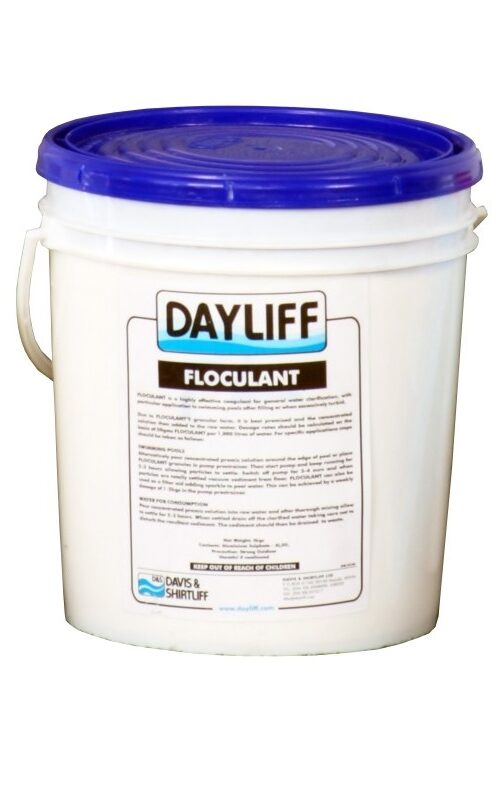
Flocculant is a water clarification chemical that clears cloudy pool water by causing suspended particles to settle to the floor. It contains PAC or polymer flocculant as the active ingredient. Ideal for treating severe cloudiness after rain, heavy use, or algae treatment. Use as needed and vacuum settled debris to waste. Egret Swimming Pools supplies quality flocculant with expert guidance for crystal-clear pool water.
Restore Crystal-Clear Pool Water with Effective Flocculant Treatment
Don’t let cloudy water keep you from enjoying your pool. Egret Swimming Pools provides premium flocculant products and expert advice for residential and commercial pool owners throughout Kenya.
- 📍 Location: Next to Total Petrol Station Kihunguro, Thika Road
- 📞 Call/WhatsApp: +254726545148
- 📧 Email: info@egretswimmingpools.co.ke | egreteswimmingpools@gmail.com
- 🕒 Working Hours: Mon – Sat 8:30AM – 5PM
Bulk orders welcome. Commercial contracts available. Let our pool chemistry specialists help you achieve and maintain crystal-clear pool water.
Reviews
There are no reviews yet.