How Long It Takes to Build a Swimming Pool in Kenya (A Timeline Guide)
By Egret Swimming Pools | Uploaded March 2026 – Egret Swimming Pools has managed hundreds of pool construction projects across Kenya since 2010 — residential, commercial, hotel, and school pools in Nairobi, Mombasa, Kiambu, Nakuru, and beyond. The timelines in this guide reflect real projects, not estimates from a brochure.
Introduction
You have decided you want a swimming pool. You have a property in mind, maybe even a target date like a December holiday, a hotel opening, a school term. The next question is always the same: how long will this actually take? It is one of the most common questions we receive at Egret Swimming Pools, and it deserves a straight answer, not a vague range designed to manage expectations downward. This guide gives you a realistic, stage-by-stage breakdown of how long it takes to build a swimming pool in Kenya, what affects the timeline, and what you can do to keep your project on schedule.
Quick Answer: A standard concrete residential pool in Kenya takes 8 to 12 weeks from groundbreaking to completion. A fibreglass pool takes 3 to 5 weeks. When you include design, permitting, and finishing, total project duration is typically 3 to 5 months for concrete and 6 to 10 weeks for fibreglass. The biggest delays are almost never in construction, they happen before a spade goes in the ground.
Timeline Guide: How Long It Takes to Build a Swimming Pool in Kenya
Why Pool Build Times in Kenya Vary
Before getting into stage-by-stage timelines, it helps to understand why there is no single universal answer to how long it takes to build a swimming pool in Kenya. These are the variables that matter most:
Pool Type Affects Construction Duration Most 
Concrete pools are built from scratch on-site. Steel, concrete, waterproofing, plaster, and tiles are all applied in sequence, each needing time to cure before the next stage begins. Fibreglass shells arrive at your site pre-manufactured — the construction phase is dramatically shorter because the shell itself is already done.
This single factor accounts for the largest difference in timeline between pool types. See our Concrete vs Fibreglass Pool Guide for a full comparison of both options.
Pool Size and Design Complexity
A 4m x 8m rectangular residential pool builds faster than a 10m x 20m hotel pool or a custom infinity pool with a vanishing edge and integrated spa. Unusual shapes, multiple depth zones, water features, and premium tile work all add time. Be honest with your contractor about your design ambitions upfront; a realistic timeline depends on a complete design brief.
Site Conditions on Your Specific Property
Rocky ground needs more excavation time and specialist equipment. Waterlogged or unstable ground, common in some low-lying areas of Nairobi and parts of Mombasa requires groundwork before the pool shell can be started. Black cotton soil, widespread across Nairobi and Kiambu County, demands careful foundation engineering that adds both time and cost.
Egret conducts a site assessment on every project before confirming a timeline. What looks like a straightforward build from the road occasionally reveals ground conditions that change the picture completely.
NCA Permits and County Approvals
 Swimming pool construction in Kenya requires building permits from the National Construction Authority and the relevant county government. This process is entirely outside the contractor’s control once applications are submitted. It is one of the most common sources of project delay, and one of the least discussed.
Engaging your contractor early, so permit applications go in before you are ready to break ground, is the single most effective way to protect your target completion date.
Kenya’s Rainy Seasons
Heavy rainfall during the long rains from March through May and the short rains from October through December slows excavation, delays concrete curing, and can make site access difficult for heavy equipment. If your target completion date falls in May or November, start at least two to three months earlier than you otherwise would.
How Long It Takes to Build a Swimming Pool in Kenya: Concrete Pool Timeline
Stage 1 — Site Assessment and Design: One to Two Weeks
Every Egret project begins here. We visit the site to assess soil conditions, drainage, access, and any structural constraints. Pool design is agreed; shape, depth profile, finishes, features, and equipment specification. For straightforward residential pools this moves quickly. For commercial or complex designs it takes longer.
Nothing that follows this stage can be done well without it. Contractors who skip proper site assessment and design confirmation are setting up the client for surprises later.
Output: Approved design drawings, full specification, and a signed contract.
Stage 2 — NCA Permits and County Approvals: Two to Four Weeks
Permit applications are submitted to the relevant county authority and the NCA. Processing time varies by county. Nairobi County residential pool permits typically take three to six weeks. Commercial pools and projects in some counties take longer.
This stage cannot be rushed. Attempting to start construction without approved permits risks a stop-work order that costs far more time than waiting for the permit in the first place. Egret manages the full permitting process on behalf of every client. It is one of the most practical ways we protect project timelines.
 Stage 3 — Site Preparation and Excavation: One to Two Weeks
Once permits are in hand, groundwork begins. The pool area is marked out, excavation proceeds to the agreed dimensions and depth, and underground service runs for drainage and plumbing are routed. Rocky or waterlogged ground extends this stage. Proper excavation is not a place to cut time, poor preparation at this stage creates structural problems that are expensive to fix later.
Stage 4 — Steel Reinforcement: One to Two Weeks
The rebar skeleton of the pool shell is installed and inspected by a structural engineer before any concrete is applied. This framework gives the pool its long-term structural strength. The steel specification: bar diameter, spacing, and cover depth is what separates a pool that lasts 30 years from one that cracks in year five.
Egret follows certified structural specifications on every project. This stage is one where client visibility is limited but contractor integrity matters most.
Stage 5 — Concrete Application and Curing: Two to Three Weeks
 Concrete is applied over the steel framework, either poured into formwork or sprayed using the gunite or shotcrete method. The concrete must then cure — a minimum of seven to fourteen days before the next stage can begin.
This curing period cannot be shortened without compromising the structural integrity of the shell. Contractors who rush this stage are doing long-term damage to your pool. Proper curing in Kenya’s climate, particularly during hot dry conditions in January and February, requires deliberate moisture management to prevent premature drying.
Stage 6 — Plumbing and Electrical Installations: One Week
Pool plumbing and electrical wiring are installed while the shell is fully accessible. Suction lines, return lines, drainage, skimmer connections, underwater lighting, and pump wiring are all completed and pressure-tested at this stage. Mistakes in the plumbing at this stage are costly to fix after tiling. That’s why Egret uses certified plumbers and electricians on all projects and conducts pressure tests before any surface finish work begins.
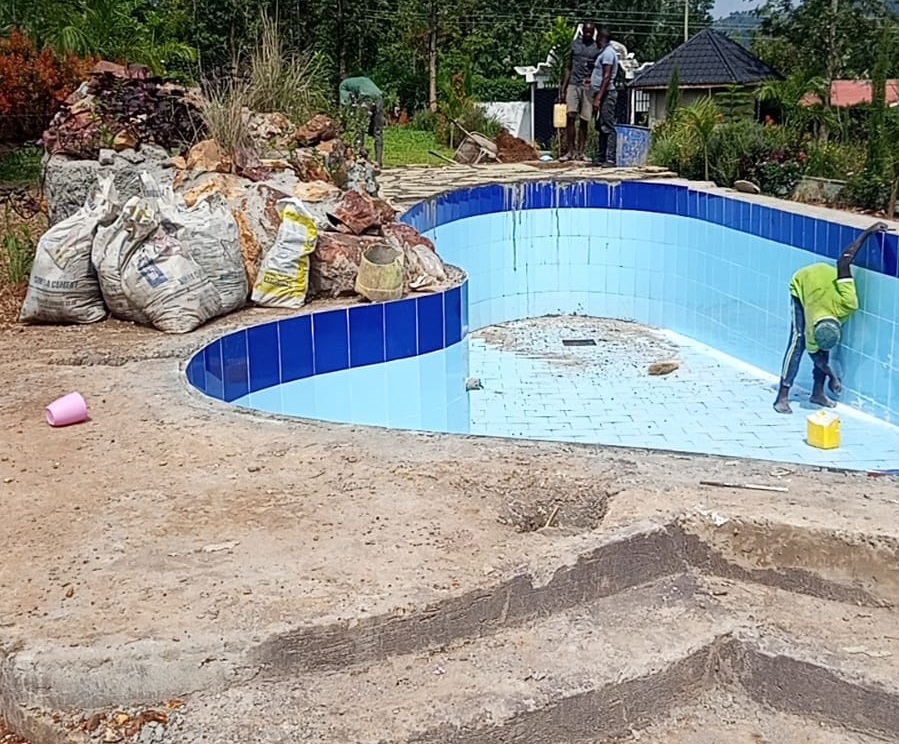
Stage 7 — Waterproofing, Plastering, and Tiling: Two to Four Weeks
The waterproofing membrane is applied to the cured concrete shell before plastering. This stage is where the most common construction shortcuts occur in Kenya’s pool market. Waterproofing that is under-specified or applied too thin is the primary cause of pool leaks in the years following construction.
Plastering follows waterproofing, and tiling follows plaster. Tile selection affects this timeline significantly — standard ceramic tiles move faster than custom mosaic work. The pool surround, coping stones, and deck area are also constructed during this stage.
Stage 8 — Equipment Installation and Testing: Three to Five Days
The filtration system, circulation pump, chemical dosing equipment, and any heating or automation systems are installed and commissioned. All equipment is tested under load before water is introduced.
Stage 9 — Water Fill and Chemical Balancing: Three to Seven Days
Filling a standard residential pool takes 24 to 48 hours depending on pool volume and water supply. For pools using borehole water — common across Kenya — initial chemical balancing requires careful management due to mineral content variation. Water chemistry is tested and confirmed before the pool is handed over.
Total realistic timeline for a standard concrete residential pool in Kenya: 10 to 16 weeks from design sign-off to first swim.
How Long It Takes to Build a Swimming Pool in Kenya: Fibreglass Pool Timeline
 The fibreglass timeline is dramatically shorter because the most time-consuming stage. Building the shell happens off-site before your project begins.
Stage 1 — Site Assessment and Shell Selection: One Week
Egret assesses the site and the client selects from available fibreglass shell sizes and shapes. Decisions are simpler and faster than for concrete because the design parameters are already defined by the manufacturer’s range.
Stage 2 — NCA Permits and Approvals: Two to Four Weeks
The permitting process is identical to concrete pools. This is often the longest stage of a fibreglass project which underlines why engaging your contractor before you are ready to build is so important.
Stage 3 — Excavation and Base Preparation: Three to Five Days
Excavation for a fibreglass pool must match the shell dimensions precisely. A compacted sand or gravel base is prepared to receive the shell. Less excavation complexity than concrete because there is no steel installation to follow.
Stage 4 — Shell Delivery and Installation: One to Three Days
The fibreglass shell is transported to the site and lowered into the excavation. Precise positioning and levelling is critical. The shell must be perfectly level across all axes before backfilling begins. Backfilling around the shell is done simultaneously as the pool is partially filled with water to balance external soil pressure against the shell walls.
Stage 5 — Plumbing, Electrical, and Equipment: One Week
Connections to skimmers, inlets, lighting, and the pump circuit are made. Same scope as the equivalent concrete stage but faster because no penetrations need to be core-drilled through cured concrete.
Stage 6 — Surround, Coping, and Deck: One to Two Weeks
The pool surround, coping, and deck area are constructed. For fibreglass projects this is typically where most of the remaining project time is concentrated.
Stage 7 — Water Fill and Commissioning: Three to Seven Days
Pool is filled and water chemistry balanced. Faster than concrete because there is no plaster curing period to wait for.
Total realistic timeline for a fibreglass residential pool in Kenya: 5 to 8 weeks from design sign-off to first swim.
How to Keep Your Pool Build on Schedule
- Start earlier than you think you need to. Most pool projects that miss their target date were delayed before construction began — during permit processing, design decisions, or client approval stages. If you want a pool by December, start conversations in August at the latest.
- Finalise your design before groundbreaking. Tile changes, shape adjustments, and equipment upgrades after construction has started cause significant delays and cost overruns. Egret’s pre-construction process is designed to lock in all decisions before work begins.
- Plan around Kenya’s rainy seasons. Long rains run from March through May. Short rains run from October through December. Build both periods into your planning if your project spans them.
- Confirm your water supply before you need it. Whether you are using mains water or a borehole, confirm your fill water source and flow rate before construction begins. Discovering your borehole flow rate is insufficient on the day of filling is a frustrating and avoidable delay.
- Choose a contractor who manages permits. Egret handles the full NCA and county permit process on every project. Clients who use contractors that leave permit management to the client consistently experience the longest pre-construction delays.
How Long It Takes to Build a Swimming Pool in Kenya: Conclusion
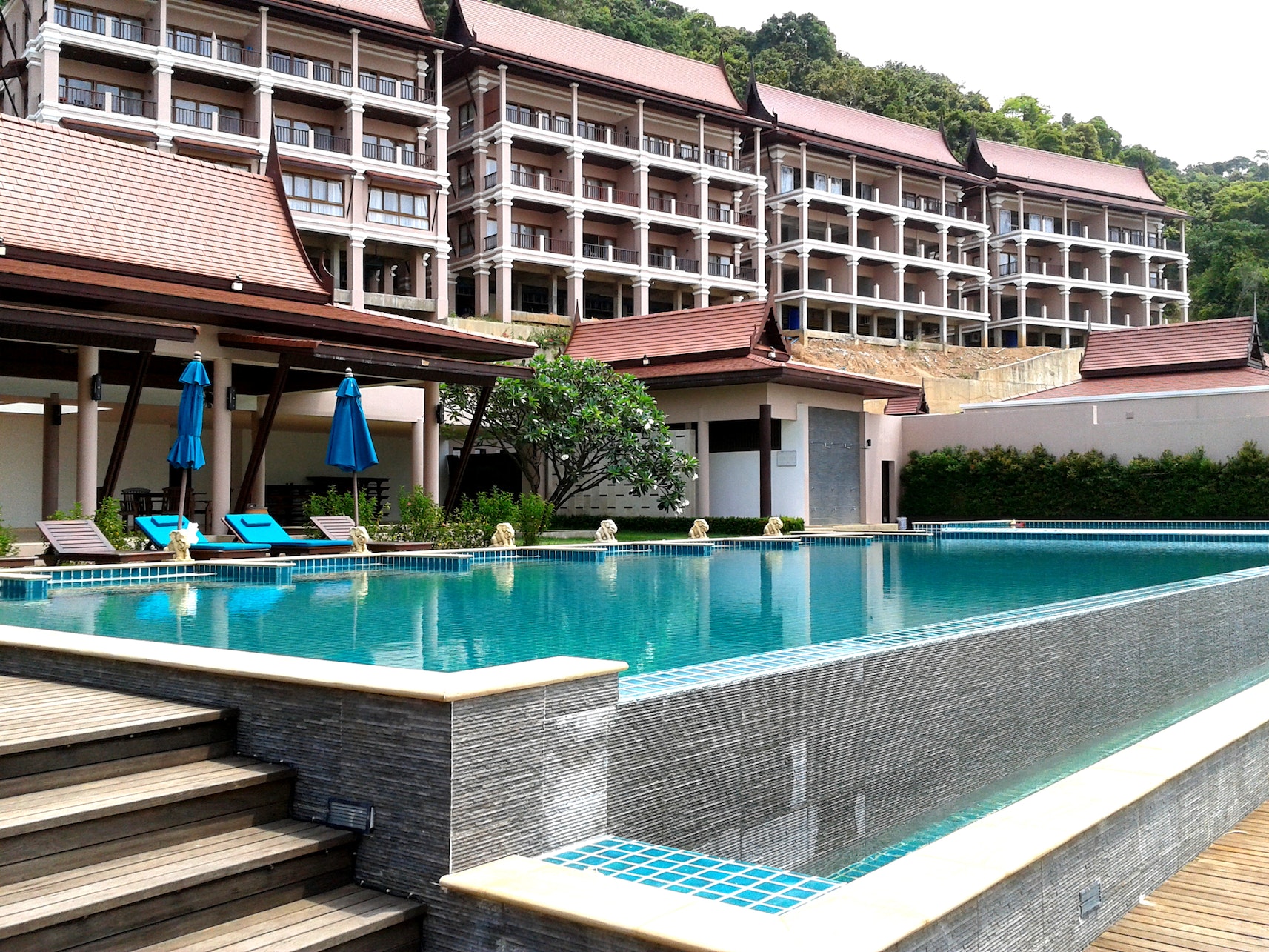 Understanding how long it takes to build a swimming pool in Kenya comes down to one key insight: the construction phase itself is rarely the problem. The delays that push pool projects past their target dates almost always happen in the stages before and between construction — permits, design changes, and poor planning. A concrete pool built by an experienced contractor, on a straightforward site, with all pre-construction decisions locked in, takes 10 to 16 weeks. A fibreglass pool on the same basis takes 5 to 8 weeks.
The most reliable way to hit your target completion date is to start earlier than you think you need to and work with a contractor who manages the full process — from design through permitting to handover.
Ready to get your pool project started? We are here to walk the journey with you. Get in touch with us today to book a site visit or for inquiries
Egret Swimming Pools manages the full construction process from initial site assessment through to handover — including all NCA and county permitting. Contact us today for a free site assessment and an honest project timeline for your specific property.
- Call Us Today or WhatsApp: You can send us a WhatsApp message at +254 726 545 148 and we will reply as soon as possible.
- Email: info@egretswimmingpools.co.ke | egreteswimmingpools@gmail.com
- Visit Us: We are located at Kihunguro behind shell petrol station Kihunguro Thika road. See Google map location.
- Comment form: You can leave a comment in the comment form below this post and we will respond to you shortly.
- Contact us form: You can fill out the contact us form here.
How Long It Takes to Build a Swimming Pool in Kenya-
Frequently Asked Questions
- Can a swimming pool be built in Kenya in under a month? A fibreglass pool can be installed in as little as three to four weeks once permits are in place and the site is prepared. The full project including design and permits rarely completes in under six weeks. Concrete pools always take longer — a minimum of ten weeks for construction alone.
- What is the fastest time of year to build a pool in Kenya? January through February and June through September are the most reliable construction periods. Dry conditions speed up excavation, support proper concrete curing, and reduce the risk of weather-related delays.
- How long do NCA permits take for a swimming pool in Kenya? Typically three to six weeks for residential pools in Nairobi County. Commercial pools and projects in some counties take longer. Egret submits permit applications as early as possible on every project to protect the client’s timeline.
- Can construction begin before permits are approved? Starting construction without approved permits risks a stop-work order from county authorities. Egret never begins groundwork without all required approvals in place.
- What causes the most common delays in pool construction in Kenya? Late design decisions, permit processing time, unexpected ground conditions, and mid-project changes to materials or finishes. Egret briefs every client on these risks during the pre-construction consultation.
Egret Swimming Pools is a swimming pool contractor based in Kihunguro, Ruiru, Kiambu County, Kenya. We manage residential and commercial pool projects from design to handover across Kenya. Call +254 726 545 148.