Complete Guide to Pool Construction Timelines in Kenya
Building a swimming pool is a significant investment that transforms a Kenyan home into a private sanctuary. However, the most common source of anxiety for homeowners in Nairobi, Mombasa, or Kisumu is not the cost, but rather the duration of the project. Understanding the phases of construction helps you manage expectations and coordinate with contractors effectively. This complete guide to pool construction timelines in Kenya provides a realistic roadmap from the first shovel in the ground to your first dive.
Also: Tips for Building any Type Swimming Pool in Kenya (A Comprehensive Guide)
Complete Guide to Pool Construction Timelines in Kenya
Phase 1: Planning and County Government Approvals (2 to 4 Weeks) 
Before any heavy machinery arrives at your property, a significant amount of “paperwork” must occur. In Kenya, you cannot legally begin excavation without architectural drawings and structural engineering stamps. You must submit these plans to your specific County Government planning department to ensure compliance with local building codes and drainage regulations. This stage is also the best time for site analysis to check for underground utility lines or rocky soil that could extend the excavation period.
Phase 2: Excavation and Steel Reinforcement (1 to 2 Weeks)
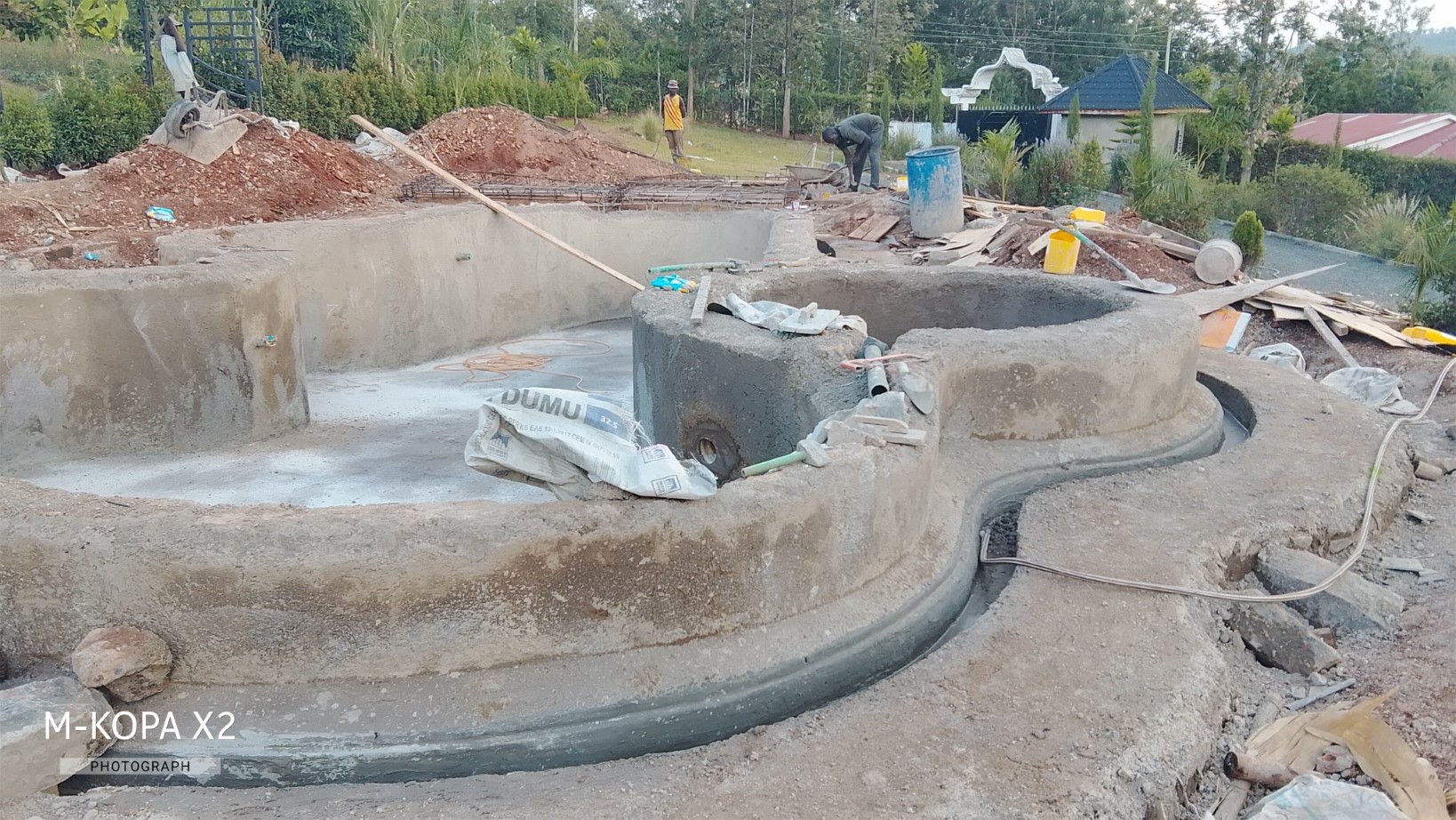
Once the permits are in hand, the physical work begins with marking the layout and the arrival of the excavation team. Depending on the accessibility of your compound, this is done either manually or using a backhoe loader. After the hole is dug, the “shell” takes shape through the installation of high-tensile steel bars. This reinforcement is the skeleton of your pool, providing the necessary strength to withstand soil pressure and water weight.
 Phase 3: Plumbing and Concrete Pouring (1 Week)
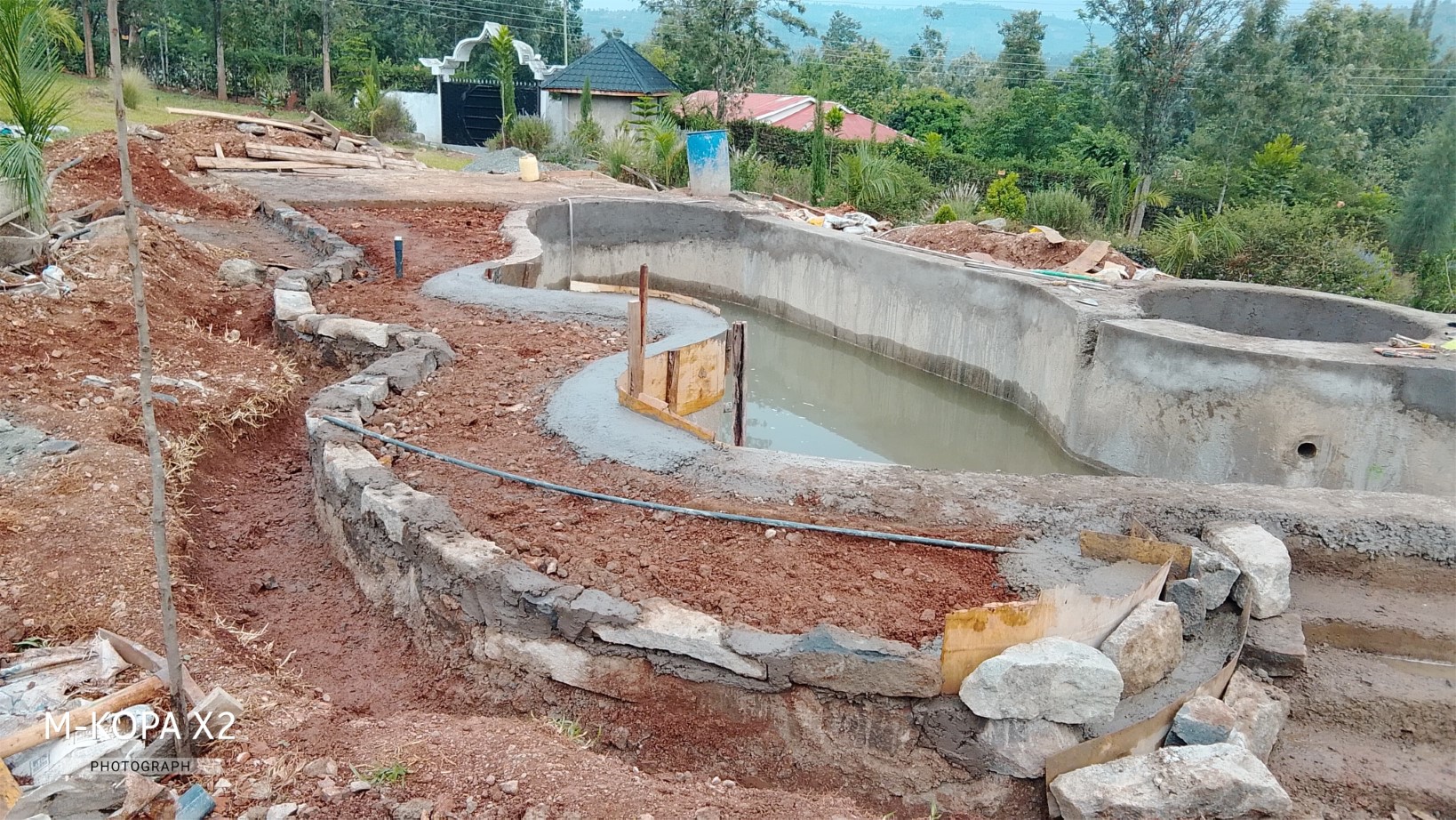
With the steel grid in place, technicians install the “rough-in” plumbing, including the main drains, skimmer lines, and return inlets. This is a critical technical step because once the concrete is poured, these pipes are permanently encased. In this complete guide to pool construction timelines in Kenya, we emphasize that the concrete pouring—often referred to as the “shell casting”—must be done in a single continuous session to avoid “cold joints” which are prone to leaks.
Phase 4: The Curing Period (21 to 28 Days)
This is the stage where many homeowners feel the project has stalled, but it is actually the most important phase for structural integrity. Concrete does not simply “dry”; it cures through a chemical reaction that reaches maximum strength over approximately four weeks. During this time, the shell must be kept moist with water to prevent cracks from forming in the hot Kenyan sun. Skipping or rushing this curing window is the leading cause of structural failure in residential pools.
Phase 5: Waterproofing and Tiling (2 Weeks)
After the shell has fully cured, specialized waterproofing layers are applied to ensure the pool remains watertight. Once the waterproofing is tested and verified, the aesthetic transformation begins with the installation of mosaic tiles or glass beads. This stage requires precision and patience, as the quality of the tiling determines both the longevity of the finish and the visual appeal of the water.
Phase 6: Finishing Touches and Handover (1 Week) 
The final week involves installing the filtration pump, sand filters, and lighting systems in the pump room. The pool is then filled with water, and a technician balances the chemical levels to ensure the water is safe for swimming. This concludes our complete guide to pool construction timelines in Kenya, leaving you with a functional asset that adds immense value to your property.
Also: Cost Of Constructing A 6 Meters By 12 Meters Swimming Pool In Kenya Shillings
Managing Expectations for Your Kenyan Pool Project
While the technical steps are standard, local factors like the long rains or delays in material delivery can shift your schedule. Working with a contractor who provides a clear project management chart is the best way to ensure your timeline remains on track. By following this complete guide to pool construction timelines in Kenya, you can confidently navigate the process and look forward to your first pool party.
Ready to Build Your Dream Pool? Get in Touch With us Today for a Quotation or to Book a Site Visit
Looking for the right swimming pool contractor to build your pool? Egret Swimming Pools is a professional swimming pool builder in Kenya. We have some of the best pool construction experts in Kenya who can build customized pool that brings your vision to reality. Get in touch with us today for inquiries or to book a site visit to get the exact quote.
- Call Us Today: +254726545148
- WhatsApp: You can send us a WhatsApp message at +254726545148 and we will reply as soon as possible.
- Email: info@egretswimmingpools.co.ke | egreteswimmingpools@gmail.com
- Visit Us: We are located at Kihunguro behind shell petrol station Kihunguro Thika road. See Google map location.
- Comment form: You can leave a comment in the comment form below this post and we will respond to you shortly.
- Contact us form: You can fill out the contact us form here.
We’ll guide you through every step, from design and permits to excavation, installation, and finishing. No surprises, just results you’ll love.
Also: 12 Steps To Building A Swimming Pool In Kenya
Complete Guide to Pool Construction Timelines in Kenya
Frequently Asked Questions: Kenyan Pool Timelines
- Does the rainy season in Kenya affect the pool construction schedule?
Heavy rainfall can significantly delay the excavation and concrete pouring phases because wet soil is unstable and concrete cannot be cast in a downpour. If your project coincides with the long rains between March and May, you should expect an additional two to three weeks added to the total timeline. Most experienced contractors recommend starting your project during the drier months to ensure a continuous workflow without weather interruptions. - Why does the concrete shell need to cure for nearly a month?
Concrete undergoes a hydration process that takes time to reach its full structural load-bearing capacity and water resistance. If you apply tiles or plaster too early, the natural shrinking of the curing concrete will cause the finishes to crack or pop off. This 28-day window is a non-negotiable safety standard that ensures your pool remains leak-proof for decades rather than just a few years. - How much time does it take to get a pool permit in Nairobi or Kiambu?
The approval process typically takes between two and four weeks depending on the current backlog at the county planning office and the completeness of your documentation. You will need a registered architect and a structural engineer to sign off on the plans before the county will issue a “Letter of Approval.” Starting this process early is essential because you cannot legally move soil until the permit is officially granted. - Can a fiberglass pool be installed faster than a concrete pool in Kenya?
Yes, a fiberglass pool shell is manufactured off-site and can be installed in as little as two to three weeks because it eliminates the long curing and tiling phases. However, the availability of high-quality fiberglass shells in the Kenyan market is more limited compared to the materials for traditional concrete builds. While the installation is faster, you may face longer lead times if the specific shell design you want has to be fabricated or shipped to your location. - What is the quickest way to speed up my pool construction timeline?
The most effective way to prevent delays is to have all materials, such as tiles, pumps, and filters, purchased and on-site before the finishing phase begins. Many projects in Kenya stall because the homeowner or contractor waits until the last minute to source specific imported tiles or specialized equipment. Ensuring that your financing is ready for each milestone payment also keeps the labor force motivated and the project moving without pauses.
People Also Ask: Common Queries
- Is it cheaper to build a pool in Kenya during the off-season?
While material costs remain relatively stable throughout the year, some contractors may offer labor discounts during the rainy season when demand is lower. However, any savings on labor could be offset by the increased costs of managing mud, pumping out rainwater, and repairing collapsed trenches. It is generally more cost-effective to build during the dry season when the project can be completed quickly and efficiently. - How deep should a standard residential pool be?
Most modern residential pools in Kenya feature a graduated depth starting at 1 meter in the shallow end and reaching 1.5 to 1.8 meters in the deep end. This “family depth” is ideal because it allows adults to stand comfortably while still being deep enough for safe swimming laps. If you intend to install a diving board, the deep end must be significantly deeper to meet safety regulations, which also increases the excavation time and cost. - Do I need a separate water meter for my swimming pool?
While not always a legal requirement, many Kenyan homeowners choose to install a separate sub-meter to track the water used for the initial fill and monthly top-ups. This helps in monitoring for potential leaks and managing your monthly utility budget more accurately. You should also check with your local water service provider as some regions have specific tariffs for high-volume water users. - What are the most durable tiles for a Kenyan swimming pool?
Ceramic or glass mosaic tiles are the gold standard for durability in the Kenyan climate because they are non-porous and resistant to chemical fading. Unlike paint or standard plaster, high-quality tiles do not need to be refinished every few years, which saves you significant maintenance time in the long run. Ensure your contractor uses waterproof grout specifically designed for submerged environments to prevent the tiles from loosening. - Should I include a pool cover in my construction plan?
Integrating a pool cover into your initial design is highly recommended to reduce water evaporation by up to 90 percent and keep the pool clean from debris. In areas like Nairobi where nights can be cool, a solar cover also helps retain the heat gained during the day, making the pool much more pleasant for early morning swims. Factoring this into the construction phase allows for a more seamless aesthetic, such as a hidden roller system.