
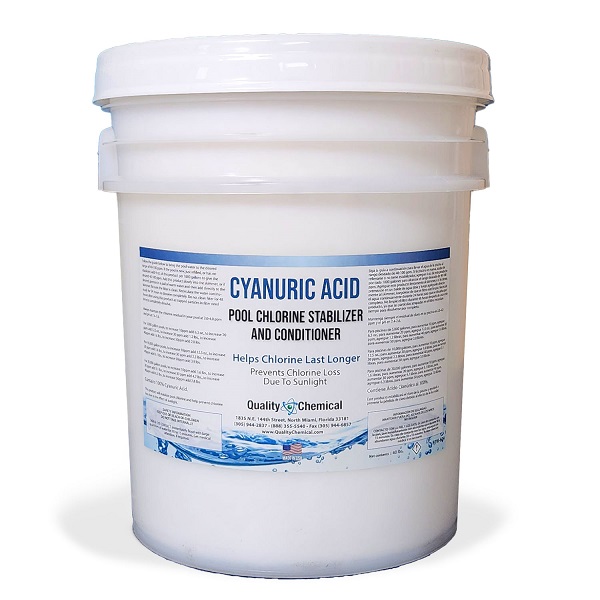
Cyanuric Acid
Cyanuric Acid
Cyanuric acid is a chlorine stabilizer that protects pool chlorine from UV degradation in outdoor pools. Essential for Kenya’s high-sunlight environment. Maintains 30-50 ppm for optimal chlorine protection. Reduces chlorine consumption by 30-50%. Monitor levels regularly. Egret Swimming Pools supplies cyanuric acid across Kenya with expert technical support.
Verified Technical Specifications
| Specification | Verified Information |
| Product Name | Cyanuric Acid |
| Chemical Category | Additional Important Pool Chemicals |
| Active Ingredient | Cyanuric Acid |
| Chemical Formula | Specification not provided in supplied reference material |
| Alternative Names | Chlorine Stabilizer |
| Primary Purpose | Protects chlorine from UV degradation |
| Typical Usage | Chlorine stabilization |
| Application Method | Added directly to pool water |
Specification details not provided in the supplied reference material. The table above reflects only information from the referenced guide.
Description
Cyanuric Acid – The Best Chlorine Stabilizer for Swimming Pools in Kenya
Product Data
| Attribute | Verified Information |
| Product Name | Cyanuric Acid |
| Chemical Category | Additional Important Pool Chemicals |
| Active Ingredient | Cyanuric Acid |
| Chemical Formula | Not specified in reference material |
| Alternative Names | Chlorine Stabilizer |
| Primary Purpose | Protects chlorine from UV degradation |
| Typical Usage | Chlorine stabilization |
Product Overview
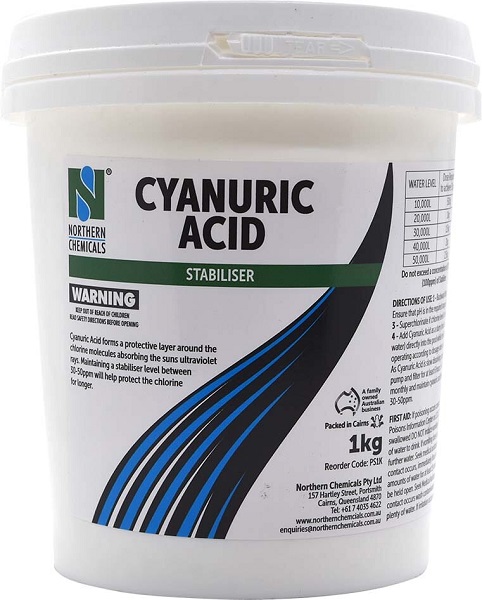 Cyanuric Acid is a specialized swimming pool chemical used to stabilize chlorine against degradation from ultraviolet (UV) sunlight. As a member of the additional important pool chemicals category, cyanuric acid acts as a chlorine stabilizer, forming weak bonds with free chlorine that protect it from rapid breakdown in direct sunlight.
In the swimming pool industry, cyanuric acid is often referred to as “chlorine stabilizer” or “pool conditioner.” Its primary function is to extend the lifespan of chlorine in outdoor pools by shielding it from the sun’s UV radiation. Without cyanuric acid, up to 50% of chlorine can be destroyed within two hours of direct sunlight exposure.
The relationship between cyanuric acid and chlorine is well-established in pool chemistry. Cyanuric acid forms a reversible complex with hypochlorous acid (the active disinfecting form of chlorine), protecting it from UV degradation. This complex slowly releases free chlorine as it is consumed, maintaining effective sanitation levels for longer periods.
Cyanuric acid is particularly important in regions with high UV exposure, making it essential for pool owners in Kenya and East Africa. The intense equatorial sunlight would otherwise rapidly deplete chlorine levels, requiring significantly higher chlorine additions and increasing maintenance costs.
The product is available in granular or liquid form. Granular cyanuric acid is typically added directly to the pool water, where it dissolves and begins protecting chlorine. Liquid formulations offer convenience and faster dissolution.
While cyanuric acid provides significant benefits for outdoor pools, it is important to maintain proper levels. The recommended range for cyanuric acid in swimming pools is 30-50 ppm. Below this range, chlorine is inadequately protected from UV degradation. Above this range, chlorine effectiveness is reduced, and algae control becomes more difficult.
Cyanuric acid is not typically required for indoor pools, which are protected from sunlight. For indoor pools, cyanuric acid use may actually be detrimental, as it can reduce chlorine effectiveness without providing UV protection benefits.
Egret Swimming Pools supplies cyanuric acid to residential and commercial pool owners across Kenya who need to protect chlorine from UV degradation. As a trusted pool chemical supplier based in Kihunguro, Ruiru, we provide quality chlorine stabilization solutions backed by expert technical advice.
How It Works
Cyanuric acid works through a chemical mechanism that protects chlorine from UV degradation while maintaining its disinfecting capability. Understanding this mechanism helps pool owners appreciate the importance of proper cyanuric acid levels.
The Chemistry of Chlorine Stabilization: 
- UV Degradation of Chlorine:
In the absence of cyanuric acid, free chlorine (hypochlorous acid, HOCl) is rapidly degraded by UV radiation from sunlight. The UV light breaks the chemical bonds in chlorine molecules, converting them to chloride ions that have no disinfecting capability. - Cyanuric Acid-Chlorine Complex Formation:
Cyanuric acid (C₃H₃N₃O₃) forms weak, reversible bonds with hypochlorous acid:
HOCl + Cyanuric Acid ⇌ Cyanuric Acid-HOCl Complex
This complex is resistant to UV degradation. The chlorine molecule is “shielded” from UV radiation while bound to the cyanuric acid.
- Controlled Release of Free Chlorine:
As free chlorine is consumed through disinfection reactions, the cyanuric acid-chlorine complex releases more HOCl to maintain equilibrium. This controlled release ensures that chlorine is available for sanitation while being protected from UV destruction. - Equilibrium and Stabilization:
The stabilization process creates an equilibrium between free chlorine and bound chlorine. This equilibrium ensures that:
- Chlorine is protected from UV degradation when bound
- Free chlorine is available for disinfection when needed
- The pool maintains effective sanitation levels
UV Protection Effectiveness:
| Condition | Chlorine Loss Rate | Effectiveness |
| No cyanuric acid | 50-75% loss in 2 hours | Poor UV protection |
| 30-50 ppm cyanuric acid | 10-20% loss in 2 hours | Good UV protection |
| >50 ppm cyanuric acid | Reduced chlorine effectiveness | Over-stabilized |
The “Chlorine Lock” Phenomenon:
When cyanuric acid levels exceed 50 ppm, chlorine effectiveness begins to decrease significantly. At very high levels (>100 ppm), chlorine can become “locked”—meaning it is so tightly bound to cyanuric acid that it is no longer available for disinfection. This is why monitoring cyanuric acid levels is essential.
Relationship with Chlorine Type:
Cyanuric acid is particularly important when using unstabilized chlorine products such as:
- Sodium Hypochlorite (liquid chlorine)
- Calcium Hypochlorite (chlorine 65%)
When using stabilized chlorine products (trichlor, dichlor), cyanuric acid is already included in the formulation. However, these products can cause cyanuric acid levels to accumulate over time, requiring monitoring and management.
Why It Matters
 Cyanuric acid is essential for outdoor pool management, particularly in Kenya’s high-sunlight environment:
- UV Protection:
Kenya’s equatorial location subjects pools to intense UV radiation year-round. Without cyanuric acid, chlorine would be rapidly destroyed, requiring frequent and costly re-application. Cyanuric acid provides the protection needed to maintain effective chlorine levels despite sunlight exposure. - Cost Savings:
By protecting chlorine from UV degradation, cyanuric acid significantly reduces chlorine consumption. Pool owners using cyanuric acid typically use 30-50% less chlorine than those without it, resulting in substantial cost savings over time. - Consistent Sanitation:
Chlorine levels remain more stable with cyanuric acid. This consistency ensures continuous protection against waterborne pathogens, reducing the risk of water quality problems. - Reduced Maintenance Frequency:
Without cyanuric acid, pool owners may need to add chlorine daily or even multiple times daily. With proper cyanuric acid levels, chlorine can be maintained with less frequent additions, reducing maintenance workload. - Algae Prevention:
Consistent chlorine levels supported by cyanuric acid help prevent algae growth. Algae is more likely to establish when chlorine levels fluctuate, and cyanuric acid helps maintain the stable chlorine levels needed for algae prevention. - Extended Chlorine Effectiveness:
By protecting chlorine from UV degradation, cyanuric acid extends the effective life of chlorine in the pool. This ensures that sanitation continues throughout the day, even during peak sunlight hours. - Outdoor Pool Necessity:
For outdoor pools in sunny climates, cyanuric acid is not optional—it is essential for effective pool water management. Outdoor pool owners who do not use cyanuric acid face significantly higher chemical costs and water quality challenges.
Key Benefits
- Protects Chlorine from UV Degradation
Cyanuric acid forms a protective shield around chlorine molecules, preventing them from being destroyed by sunlight. This protection ensures that chlorine remains effective throughout the day, even during peak UV hours.
- Why it matters: Without protection, chlorine can be destroyed within hours, leaving the pool vulnerable to contamination.
- Practical outcome: Effective chlorine levels maintained throughout the day.
- Reduces Chlorine Consumption and Costs
By protecting chlorine from UV destruction, cyanuric acid reduces chlorine consumption by 30-50%. This translates into significant cost savings over time, particularly for large pools and commercial facilities.
- Why it matters: Chlorine is the most expensive pool chemical; reducing consumption saves money.
- Practical outcome: Lower chemical costs and reduced chlorine handling.
- Maintains More Stable Chlorine Levels
Cyanuric acid helps maintain consistent chlorine residuals by reducing rapid degradation. This stability means fewer fluctuations in chlorine levels, making water chemistry easier to manage.
- Why it matters: Stable chlorine levels provide consistent sanitation and reduce the need for frequent adjustment.
- Practical outcome: Easier water quality management and more predictable results.
- Essential for Outdoor Pools in Kenya’s Climate
Kenya’s intense sunlight makes cyanuric acid essential for outdoor pools. Without it, chlorine is rapidly destroyed, making effective pool maintenance extremely difficult and expensive.
- Why it matters: Kenyan outdoor pools require UV protection for chlorine to be effective.
- Practical outcome: Practical, cost-effective pool maintenance in Kenya’s climate.
- Reduces Need for Frequent Chlorine Additions
With cyanuric acid protection, chlorine levels remain adequate for longer periods. This reduces the frequency of chlorine additions, saving time and effort in pool maintenance.
- Why it matters: Less frequent chemical handling means more time enjoying the pool.
- Practical outcome: Reduced maintenance workload and more convenient pool care.
- Prevents Algae Growth
Stable chlorine levels supported by cyanuric acid help prevent algae growth. Algae thrives when chlorine levels fluctuate, and cyanuric acid helps maintain the consistent levels needed for algae prevention.
- Why it matters: Algae prevention is more effective and cost-efficient than algae treatment.
- Practical outcome: Reduced algae problems and lower maintenance costs.
- Enhances Overall Water Quality
By maintaining effective chlorine levels, cyanuric acid supports overall water quality. Consistent sanitation ensures that water remains safe, clear, and comfortable for swimmers.
- Why it matters: Comprehensive water quality depends on effective sanitation.
- Practical outcome: Safe, clear, comfortable pool water.
Problem-Solution Table
| Problem | Likely Cause | How Product Helps | Expected Outcome |
| Chlorine disappearing quickly | UV degradation | Protects chlorine from sunlight | Maintained chlorine levels |
| High chlorine consumption | No cyanuric acid | Reduces chlorine demand | Lower chlorine costs |
| Frequent chlorine additions needed | Rapid chlorine loss | Extends chlorine effectiveness | Less frequent dosing |
| Algae growth despite chlorination | Fluctuating chlorine levels | Stabilizes chlorine levels | Algae prevention |
| Inconsistent water quality | Chlorine level fluctuations | Maintains stable chlorine | Consistent water quality |
| High chemical costs | Excessive chlorine use | Reduces chlorine consumption | Lower operating costs |
| Commercial pool inefficiency | Rapid chlorine consumption | Stabilizes chlorine | Reduced maintenance burden |
Dosage & Application Guidance
Dosage requirements vary depending on manufacturer specifications, pool volume, current cyanuric acid level, target level, and treatment objectives. Always follow product label instructions and professional water test results.
General swimming pool industry guidance for cyanuric acid use:
Initial Application (New Pools or Zero Cyanuric Acid):
- Target level: 30-50 ppm
- Dose: Approximately 1.3 kg of cyanuric acid per 10,000 liters raises CYA by 30 ppm
- Calculate dose based on pool volume
- Add directly to skimmer or dissolve in bucket of water
- Run pump for 24 hours for distribution
Maintenance Application (Topping Up):
- Test cyanuric acid level regularly
- Add as needed to maintain 30-50 ppm
- Avoid exceeding 50 ppm
Important Considerations:
- Do not add cyanuric acid and chlorine simultaneously
- Wait 3-5 days after adding cyanuric acid before testing
- High alkalinity can affect cyanuric acid test results
- Avoid exceeding 50 ppm to prevent chlorine lock
- For new pools, add cyanuric acid before chlorine
- Some products contain cyanuric acid (trichlor, dichlor)
Water Balance Reference Table
The values below represent general swimming pool industry guidance. Cyanuric acid levels should be monitored and maintained within the recommended range:
| Parameter | Recommended Range | Notes |
| Cyanuric Acid | 30 – 50 ppm | Target 30-40 ppm for optimal protection |
| Free Chlorine | 1.0 – 4.0 ppm | Higher levels may be needed at high CYA |
| pH | 7.2 – 7.8 | Standard pool pH range |
| Total Alkalinity | 80 – 120 ppm | Buffer capacity |
| Calcium Hardness | 250 – 350 ppm | Prevents scaling/corrosion |
Step-by-Step Application Guide
Cyanuric Acid Application:
Before Treatment:
- Test current cyanuric acid level
- If level is below 30 ppm, addition is needed
- Calculate required dose based on pool volume
- Note: 1 kg per 10,000 liters raises CYA by approximately 30 ppm
During Treatment:
- With pump running, add cyanuric acid directly to skimmer
- Alternatively, dissolve in bucket of water and add to pool
- Run pump continuously for 24 hours for distribution
- Do not backwash for 24 hours after addition
After Treatment:
- Continue pump operation for 24 hours
- Wait 3-5 days before testing cyanuric acid level
- If level is still below 30 ppm, repeat dose
- If level exceeds 50 ppm, avoid further addition
Testing and Monitoring:
- Test cyanuric acid monthly
- Test more frequently if using stabilized chlorine products
- Monitor free chlorine levels (may need adjustment at high CYA)
- Record results to track trends
Troubleshooting:
- Cyanuric acid too low: Add additional cyanuric acid
- Cyanuric acid too high: Dilute by partially draining and refilling
- Chlorine ineffective at high CYA: Reduce CYA or increase chlorine
- Cloudy water: Check CYA and chlorine relationship
Kenya & East Africa Usage Guide
Cyanuric acid is particularly important in Kenya’s pool environment due to regional factors:
- High UV Exposure:
Kenya’s equatorial location subjects pools to high UV radiation year-round. Cyanuric acid is essential for protecting chlorine from this intense sunlight. Without it, chlorine loss is rapid and maintenance becomes impractical and expensive. - Warm Temperatures:
Kenya’s warm water temperatures increase chlorine demand and algae growth. Cyanuric acid helps maintain stable chlorine levels despite these challenges. - Outdoor Pool Dominance:
Most pools in Kenya are outdoor and exposed to direct sunlight. Cyanuric acid is essential for practical outdoor pool maintenance. - Commercial Pool Requirements:
Hotels and resorts need efficient pool operations. Cyanuric acid reduces chlorine consumption and maintenance burden, supporting cost-effective operations. - Residential Pool Practicality:
Homeowners benefit from reduced chlorine consumption and less frequent chemical additions. Cyanuric acid makes residential pool maintenance more practical and convenient. - Seasonal Variations:
Rainy and dry seasons affect pool chemistry. Cyanuric acid helps maintain consistent chlorine levels across seasonal changes. - Stabilized Chlorine Use:
Many pool owners in Kenya use stabilized chlorine products (trichlor tablets) that include cyanuric acid. Monitor levels to prevent over-stabilization.
Commercial Applications
Cyanuric acid is essential for commercial pool operations:
- Hotels and Resorts:
Reduced chlorine consumption means lower chemical costs. Cyanuric acid supports efficient commercial operations. - Water Parks:
Large outdoor facilities benefit from chlorine stabilization. Reduced chlorine demand supports cost-effective operations. - Schools and Universities:
Educational facilities need practical, cost-effective pool maintenance. Cyanuric acid supports this requirement. - Apartment Complexes:
Managed pools benefit from reduced chlorine consumption and maintenance. Cyanuric acid supports property management needs. - Pool Maintenance Companies:
Professional service providers use cyanuric acid to maintain stable chlorine levels for clients.
Residential Applications
Cyanuric acid serves residential pool owners:
- Private Homes:
Homeowners enjoy reduced chlorine costs and less frequent chemical additions. Cyanuric acid makes pool maintenance more practical. - Holiday Homes:
Properties used intermittently benefit from stable chlorine levels. Cyanuric acid protects chlorine during vacant periods. - Airbnb Properties:
Investment property owners maintain water quality with reduced effort. Cyanuric acid supports this convenience.
Safety & Handling
High concertation of cyanuric acid can also have some health risks. You need care when handling it.
On the other hand, cyanuric acid is safe when handled properly:
Storage:
- Store in a cool, dry place
- Keep away from children and pets
- Store away from other pool chemicals
- Keep containers tightly sealed
Personal Protective Equipment (PPE):
- Gloves when handling
- Eye protection recommended
- Wash hands after handling
- Avoid inhaling dust
Handling Precautions:
- Avoid skin and eye contact
- Do not ingest
- Use in well-ventilated areas
- Do not mix with other chemicals
Spill Response:
- Sweep up dry spills carefully
- Flush area with water
- Prevent entry into drains
Environmental Considerations:
- Cyanuric acid is generally environmentally benign
- Avoid large releases into water bodies
- Follow local disposal regulations
First Aid:
- Eye contact: Flush with water for 15 minutes; seek medical attention
- Skin contact: Wash with soap and water
- Inhalation: Move to fresh air
- Ingestion: Drink water; do not induce vomiting; seek medical attention
Product Comparison
Cyanuric acid is compared with other approaches to chlorine stabilization:
| Feature | Cyanuric Acid | Stabilized Chlorine | No Stabilization |
| Active Ingredient | Cyanuric Acid | Trichlor/Dichlor | N/A |
| Purpose | Stabilizes chlorine | Chlorine + Stabilizer | N/A |
| Control | Separate control | Built-in | N/A |
| Level Monitoring | Required | Monitor combined | N/A |
| UV Protection | Excellent | Good | None |
| Accumulation Risk | Manageable | High | N/A |
| Cost | Separate | Included | Chlorine-only cost |
Cross-Selling Recommendations
- DPD Tablets
Regular chlorine testing is essential for managing pools with cyanuric acid. DPD Tablets provide accurate chlorine measurement. - Cyanuric Acid Test Kit
Monitor cyanuric acid levels to ensure they remain in the 30-50 ppm range. A dedicated test kit is recommended. - Chlorine Sanitizer
Cyanuric acid works with chlorine. Ensure you have appropriate chlorine products for your pool. - pH Plus or pH Minus
Maintain proper pH for chlorine effectiveness. pH adjustment supports chlorine performance. - Shock Chlorine
Periodic shock treatment oxidizes organics. Stabilized chlorine may require different shock protocols.
Buying Guide
How to Choose Cyanuric Acid
- Form: Granular is standard; liquid offers convenience
- Purity: High purity for consistent results
- Quantity: Based on pool size and expected consumption
- Frequency: Consider how often you need to add stabilizer
Common Mistakes to Avoid
- Adding too much: Exceeding 50 ppm reduces chlorine effectiveness
- Not testing: Cyanuric acid levels must be monitored
- Assuming all chlorine products include stabilizer: Some do not
- Ignoring accumulation: Stabilized chlorine products can increase CYA over time
- Forgetting indoor pools: Cyanuric acid is not needed for indoor pools
What Professionals Recommend
- Maintain cyanuric acid at 30-50 ppm
- Test cyanuric acid monthly
- Use unstabilized chlorine with cyanuric acid for control
- Monitor chlorine levels; may need higher at high CYA
- Consider partial drain if CYA exceeds 50 ppm
Cyanuric Acid- FAQs
- What is cyanuric acid used for in pools?
Cyanuric acid is used as a chlorine stabilizer, protecting chlorine from UV degradation in outdoor pools. - How much cyanuric acid should I add to my pool?
Add enough to achieve 30-50 ppm. Dose depends on pool volume and current level. - Does cyanuric acid affect chlorine effectiveness?
At appropriate levels (30-50 ppm), cyanuric acid reduces chlorine effectiveness slightly but provides essential UV protection. - Is cyanuric acid needed for indoor pools?
No, indoor pools do not need cyanuric acid as they are not exposed to sunlight. - How often should I test cyanuric acid?
Test cyanuric acid monthly or whenever you suspect levels are changing. - What happens if cyanuric acid levels are too high?
Chlorine becomes less effective (“chlorine lock”). Levels above 50 ppm should be reduced by dilution. - Can cyanuric acid be removed from pool water?
Cyanuric acid cannot be easily removed except by partial draining and refilling with fresh water.
Cyanuric Acid- Summary
Cyanuric acid is a chlorine stabilizer that protects chlorine from UV degradation in outdoor pools. Essential for Kenya’s high-sunlight environment. Maintains 30-50 ppm for optimal protection. Reduces chlorine consumption by 30-50%. Monitor levels regularly to prevent over-stabilization. Egret Swimming Pools supplies cyanuric acid with expert guidance for effective chlorine stabilization.
Protect Your Pool Chlorine with Professional Stabilization
Stop wasting chlorine to UV degradation. Egret Swimming Pools provides cyanuric acid and expert water chemistry guidance for residential and commercial pool owners throughout Kenya.
- 📍 Location: Kihunguro, Ruiru – Kiambu County
- 📞 Call/WhatsApp: +254726545148
- 📧 Email: info@egretswimmingpools.co.ke | egreteswimmingpools@gmail.com
- 🕒 Working Hours: Mon – Sat 8:30AM – 5PM
Bulk orders welcome. Commercial contracts available. Let our pool chemistry specialists help you optimize your chlorine stabilization program.
Reviews
There are no reviews yet.